Get in the robot, reader
How mecha as a genre is overlooked and why you should give it a try
by Jesse boruff
This column originally ran in Back Alley Games Issue 18, August 2025
Recently in my internet travels, an angry forum user labeled me braindead because I like Gundam and giant robots, which irked me.
Not because someone was mean to me online, that shit happens all the time. No, I was irked because Gundam doesn’t deserve to be called braindead.
All my life I’ve been infatuated with the idea of giant robots. The term more than likely makes you think about Transformers, Gundam or any of the Power Rangers’ Megazords. Or maybe it makes you think of the “super fighting robot” subgenre, with entries like the Mazinger series where the robot brandishes a giant claymore to do battle with aliens and other bots.
The mecha genre can get dark, as is expected of stories about giant war machines. In Gundam’s case, these dark themes often consist of using said war machines to convey an anti-war message.
Which, considering the time its creator was born and grew up in, that tracks.
In 1941, in the shadow of WWII, Yoshiyuki Tomino was born in Japan. His creativity and vision led him to draft Mobile Suit Gundam throughout the ‘70s.
His original draft was much different from the series we got – it allegedly involved a revolutionary alien lesbian princess? – but the themes seemingly remained consistent; an overt anti-war sentiment delivered by stylish and powerful Gundam mechs.
More accomplished writers than I (like Fred Patten) have made the observation that the inception of the mecha genre likely comes from the cultural trauma of WWII and its nuclear outcome. Knowing that, it’s not much of a shock that the genre isn’t as prominent in the West as it is in Japan.
The American giant robot era is most well-known for the Transformers series, but other favorites include Voltron (1984) and Robotech: The Macross Saga (1985), both Japanese imports. Sure, the kids of the ‘80s really did love those properties, but as those kids got older, the prominence of giant mechs fell measurably.
For the ‘90s kids, while Mobile Suit Gundam Wing (1995) and The Big O (1999) saw great acclaim from their respective Toonami runs, exposure to the genre more often than not remained with Transformers or the Megazords from Saban’s Power Rangers.
From my perspective, it feels like people call mecha mindless because it’s something they’ve left squarely in their childhoods. They see it as commercial and childish.
Due to this perception, when people recommend mecha content to the uninitiated, it’s often preceded by statements like, “You’ll like this one because it focuses on the characters instead of the mechs.”
This is a statement made in overcompensation.
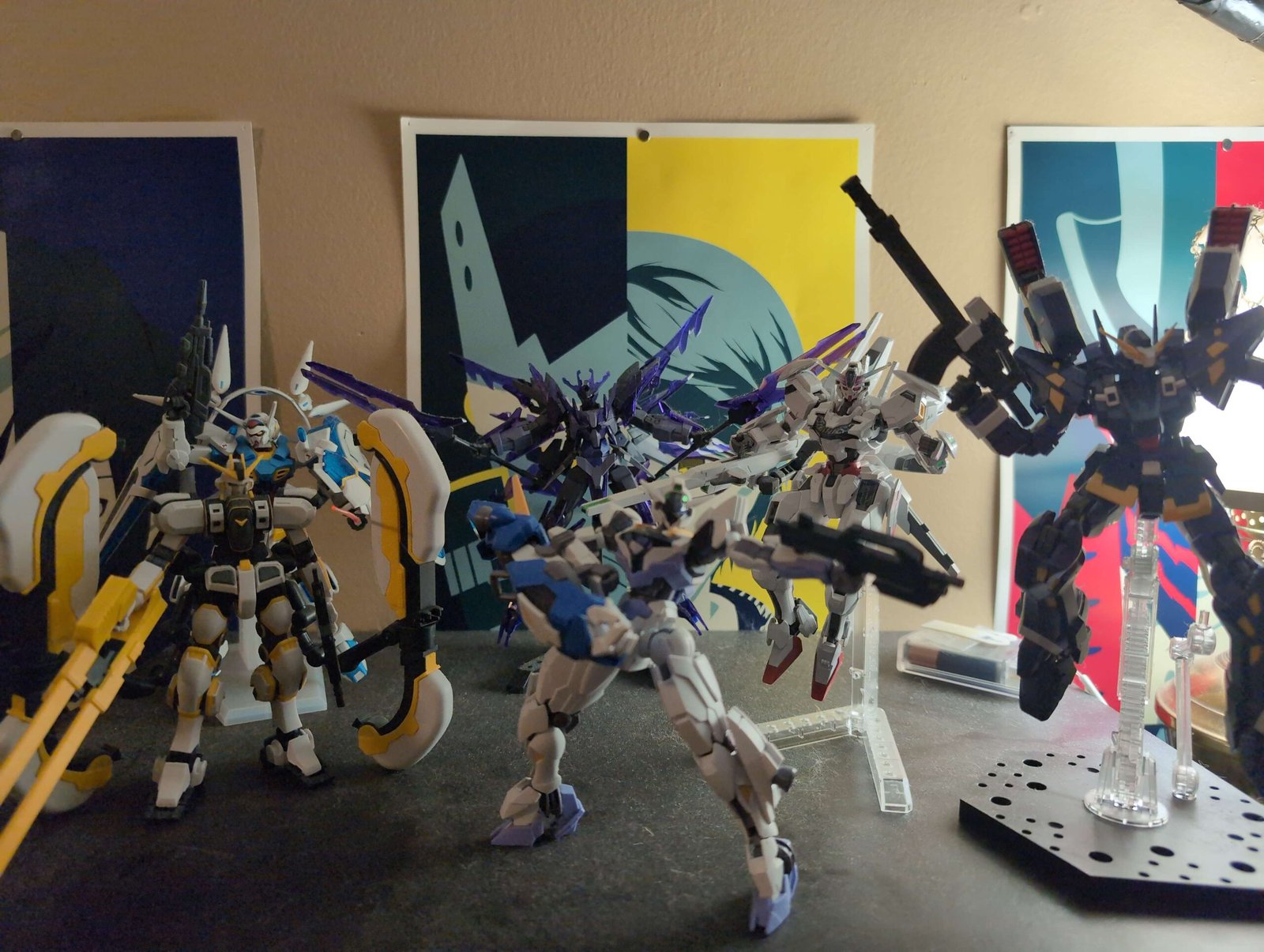
In reality, most mecha shows have always focused on the human characters, though the desire to sell toys to kids is certainly still there. Heck, the 90 billion different Gunpla plastic model kits, numerous Gundam movies, and countless Gundam video games can attest to that.
That said, since this is a gaming column, I initially wanted to recommend some games that break through the misconception that mecha is commercial and childish. Games that deliver some undeniably powerful narratives and that may assuage some trepidations about the genre.
However, I also wanted to show off some titles that also contain some spectacular gameplay, so I’ve gathered what I consider the best of both worlds. At the end of the day, I’m not under the delusion that everyone will want to pick one of these games up and try them, as giant robots might not be your thing.
To those people, I also would add that there are numerous aesthetics that can be applied to the genre: steampunk, space faring sci-fi, even medieval D&D-style settings. Speaking of which:
White Knight Chronicles (Level-5, 2008) hits you with Level-5’s signature metric ton of bait and switches, the first of which is having you create an avatar, only to then have your OC’s boss at a brewery introduce you to the real main character.
Yes, your avatar is a mute party member. Hilarious, but also so very refreshing. From there, you traipse about the wilds battling and leveling up, enjoying a deceptively complex and intriguing battle system, and possibly wondering where this titular White Knight, featured so prominently on the box art, is hiding.
When the proverbial shit hits the fan in the plot, you’ll eventually find yourself piloting the White Knight, a giant, noble looking behemoth. You’ll battle against hulking creatures and maybe even some rivals of the same stature and ability as your mech.
I’m being coy as to avoid spoiling much, so just know that if the White Knight was the only one of its kind, I’d probably not consider this game a mecha game. It’s so very satisfying to return to a previous area to take on the hulking enemies you may not have wanted to battle as itty-bitty humans.
While the story can be standard fantasy fare, Level-5’s distinctive style is very prominent here. One fun example is the frog people, who are in charge of forging and synthesizing items. The cities are also satisyfing to explore and quite imaginative, my particular favorite being the Free City of Greede, a massive center of commerce built on the back of a giant creature.
If you watched and loved The Vision of Escaflowne, this one’s for you.
For roguelite fans, Metal Bringer (ALPHAWING, 2024) feels like if Hades (Supergiant, 2020) and Gundam had a baby. Funnily enough, I found this game while searching up Mecha Break on the PSN store, a multiplayer mecha hero shooter. Sadly, I learned that PlayStation probably wouldn’t be seeing Mecha Break for some time.
Instead, what greeted me was a well rendered anime girl behind a big “Metal Bringer” logo. Taking a peek at the game’s store page, I was instantly hooked. I never considered myself a hardcore roguelite or roguelike player, though games like The Binding of Isaac (Edmund McMillen, 2011), Vampire Survivors (Poncle, 2022), and Hades have certainly gotten a good number of hours out of me.
Then along came Metal Bringer.
You play as an android searching for a way to save humanity all while descending through a futuristic industrial metropolis, home to numerous hostile androids and the massive mecha they pilot.
The loop is simple. Start a run, gather buffs from discs – like extra range on melee attacks or resistance to explosions, among other things, and build up a mech by knocking parts off enemy bots.
The different part types to collect consist of head, legs, right arm and left arm, and there are numerous combinations. You can even take one of your favorite parts and save it at a store, which costs currency but unlocks the part for use right from the start of future runs.
The loop is highly gratifying, and I’ve found myself getting lost in that “one more run” feeling.
As you descend toward your ultimate goal, the story slowly unravels in the form of text logs found scattered throughout the world. Some seem innocuous, while others paint a very grim image of the world the way it is now. The only beings that communicate with you are helper bots that collect pickups for you and the hostile boss androids, each one also attempting to reach the bottom of the metropolis.
It’s an intriguing plot with some great hooks.
The other side of Metal Bringer’s coin is a blend of RTS and visual novel, Vanillaware’s 2019 sci-fi epic, 13 Sentinels: Aegis Rim. This game leads players through a sprawling narrative with interweaving storylines.
Most of your time will be spent with one of the 13 characters as they explore their town, unraveling the plot’s intrigue. Then you’ll board their massive mecha in RTS battles as they desperately protect their home from mysterious forces.
The story is the star of the show here, with its interpersonal conflicts and incredible plot twists making me hesitant to divulge any more detail. What I can say is that 13 Sentinels is one of the finest gaming narratives ever made.
The VAs are all bringing the sauce, George Kamitani’s art is as mind blowing as always, and I gotta say that in 2019, when this dropped, it hit like a meteor. Most discussions around Game of The Year at least mentioned this game, if for nothing else than it’s critically acclaimed plot and writing.
Did I mention George Kamitani’s art yet? I did?
Well, let me do it again, because WOW. Even just stumbling around the street is indescribably beautiful, which should come as no surprise to Vanillaware fans. That’s not to mention the mecha designs, which maintain an odd sleekness while still being hulking and brutal looking.
Then you have the RTS segments, which at first really turned me off on the game. Yet as I started to grasp the mechanics, the more they grabbed me and got me stuck.
The pace is frantic, overwhelming, and sometimes desperate, but it blends its narrative perfectly with its stifling atmosphere.
When it comes to atmosphere, FromSoftware is a company that can deliver that in spades. For a long time, the Armored Core series was stuck in the past, left behind on the PS3 as the company pressed forward with their Souls-style titles. Then, in 2023, the sixth entry in the mech action series was released; Armored Core VI: Fires of Rubicon.
Sporting a faster combat system more reminiscent of the fourth entry than the fifth, old school fans and new pilots alike flocked to the game. Being the first AC title since the Souls games garnered their massive popularity, many were excited to experience the series for the first time.
What those players got was an explosive return to form. The screen is packed with diagnostics, meters, gauges and other displays that players are expected to keep track of.
The HUD of the Armored Core games has always been one of the most immersive in gaming. Your heat gauge flashes red and beeps when you’re pushing your AC to its limits, and ultra powerful weapons detach your arm units and replace them with WMDs.
On top of all that, the narrative has you either stand for or against the planet of Rubicon as numerous corporations and PMC groups raid it for its unique and powerful resource; a sentient form of fuel called “coral.”
Everyone is after the resource, to either harness it or destroy it, while those native to planet Rubicon desperately try and wrestle their home back from the extraterrestrial invaders. You’ll meet numerous pilots that will ally themselves with you and others that will turn their powerful Armored Cores against you.
Eventually you’ll meet one of the game’s bosses, sometimes an enemy AC, and sometimes not, with unbelievable capabilities you’ll feel overwhelmed by. During these fights, I found myself eventually reaching a flow state, and the battle turned into a dance of death as my foe and I deftly dodged and countered each other.
When it comes to high-speed mecha battles, AC6 is nearly unmatched.
Mecha is one of the most flexible genres through which to tell a story. From its inception as a cultural tool to series like Sakura Wars where the battles take a back seat to the dating sim elements, mecha can wear many hats.
Both inside and outside the gaming sphere, you can find pretty much any narrative you can think of within the genre. Romance, battle Shonen, drama, thrillers; much like those genres, mecha is a vehicle that can be used to deliver any kind of theme or message a creator desires.
Your mecha can be magical, technological, metaphysical, it doesn’t matter. It’s a malleable genre capable of doing practically anything. So, if you were ever hesitant to “get in the robot” as Gendo Ikari would say, let this be your excuse to give it a try.
Even if it’s not any of the games I mentioned above, I promise there’s a mecha game out there for you.