University of Chicago kicks off its Year of Games
by Jonah white
This column originally ran in Back Alley Games Issue 20, November 2025
The University of Chicago has declared the 2025-26 academic year the “Year of Games.” Over nine months, the university will be putting on a series of events, exhibits, and interactive activities celebrating game design and play.
The purposes of this initiative, as stated on their website, include “sharing the work of our campus’ game creators,” “producing and sharing knowledge about games and play as cultural objects and practices,” “strengthening connections…with local residents and members of the Chicago community,” and, of course, “strengthening UChicago’s appeal as a destination for prospective students!”
The Year of Games kicked off with a three-day symposium starting October 17. Attendees got to experience carillon church bells playing popular video game music at Rockefeller chapel, a live performance of “The Entertainment” from the video game Kentucky Route Zero (2013), and a dozen talks and seminars.
Topics including games preservation, music, industry careers, difficulty, inclusivity, and academia were discussed by over 20 speakers, including names like Alex Seropian, Evan Narcisse, Billy Basso, Mitu Khandaker, Joanna Fang, Jake Elliott, and Son M.
Back Alley Games even got a shoutout during the talk “Games + Chicago: Then & Now!”
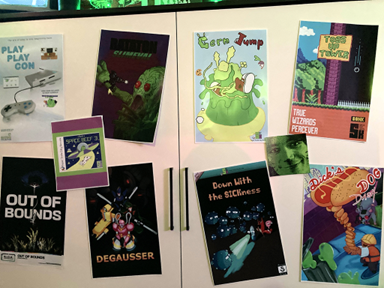
Since the symposium, the initiative has seen a diverse lineup of events, including a live playthrough of the infamous 1992 game Night Trap, a screening of the new Nebula documentary series about the annual UChicago scavenger hunt “SCAV,” a video game music concert, and a presentation of eight live-action and machinima short films.
The university’s current attraction is an exhibit called “Charting Imaginary Worlds: Why Fantasy and Games Are Inseparable.” Featured in an exhibition gallery at the Regenstein Library, the exhibit explores core pillars of the fantasy genre such as map making and invented languages through novels, video games, tabletop RPGs, and other media.
As part of the exhibit, guests are encouraged to sit down at one of three PC stations where they can play the Atari 2600 classic Adventure, Golden Axe II for the Sega Genesis, or modern PC game Dragon Age: The Veilguard. A collection of fantasy novels, artbooks, and scholarly works are also available for visitors to peruse.
“Charting Imaginary Worlds” will be on display until December 12, after which point it will be replaced with another collection of games from the library’s Rare Book and Archival Collections, as indicated by a plaque inside the gallery. There will also be a guided tour December 5 for those looking for a more in-depth experience.
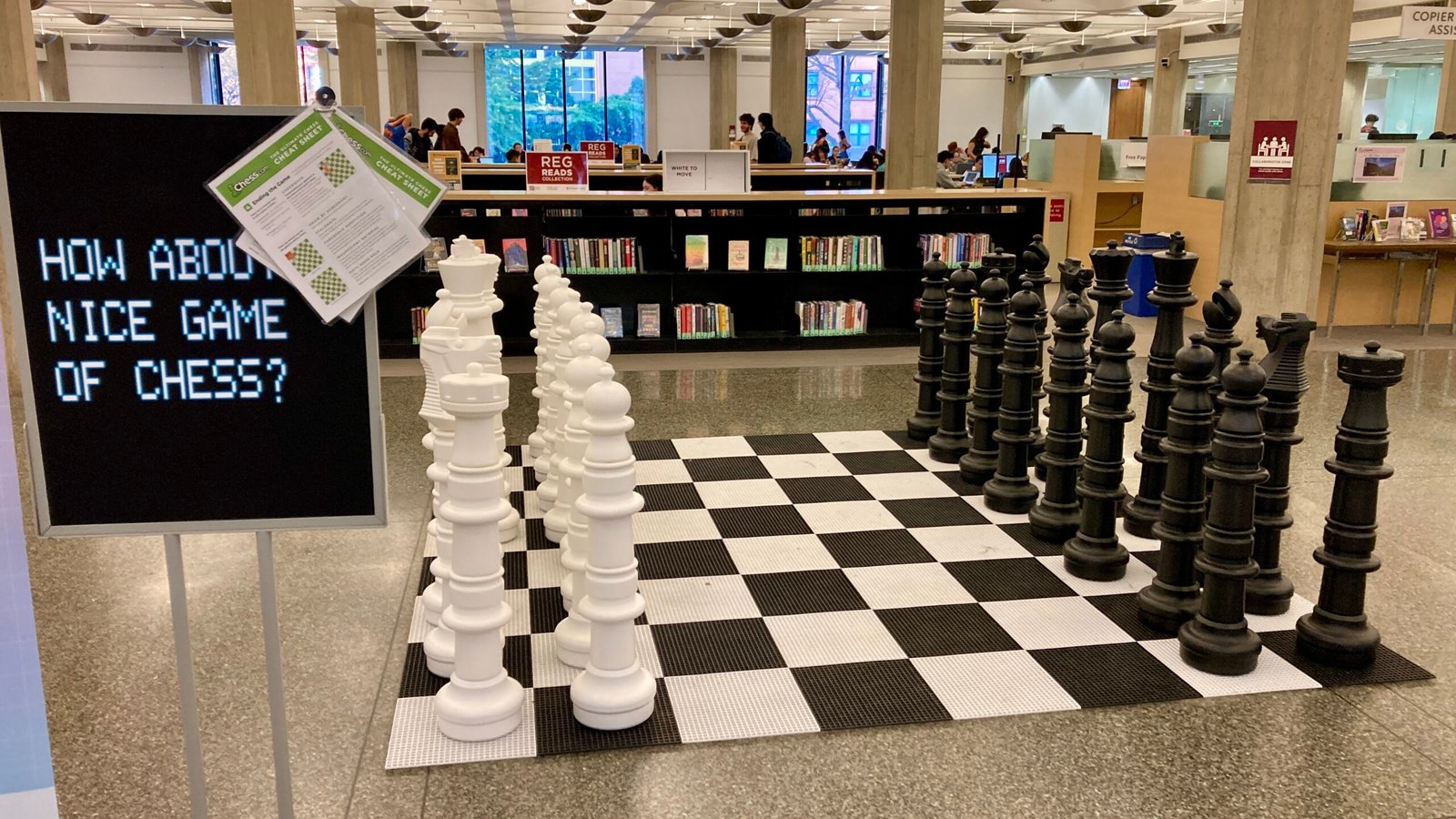
Outside of the gallery, the Regenstein Library is full of installations and displays about games and culture. “Not a Side Quest: Feminist Interventions in Korean Game Culture” on the fifth floor is a particularly notable display exploring the relationship between feminism and gaming in Korea.
As touched on in the exhibit, the treatment of women in Korean gaming spaces has been a hot topic since 2016, after a picture of voice actress Kim Ja-yeon wearing a shirt that read “GIRLS Do Not Need A PRINCE” sparked anti-feminist backlash online. The backlash snowballed into a full-on harassment campaign against women in gaming that has been compared to the #gamergate movement in the USA.
In the Rascal News article “How RPGs Became a Haven for Women in South Korea,” journalist Thomas Manuel explains how the 2016 incident has had widespread impact on the Korean gaming industry. In particular, he explains how the tabletop RPG Call of Cthulhu saw an influx of female players after Dayspring Games – the company that publishes the game in Korea – stood up for a game designer targeted by the mob, an act that set them apart from other video game studios, who “almost without exception bent over backwards to appease the trolls.”
This is just one example of how games and culture intersect, and if the Year of Games can produce even a handful of exhibits like this one, it will have done a great deal in spreading knowledge of games as cultural objects. More rotating displays will be presented throughout the year. Some promised displays include selections from the Dean of the University Library’s personal games collection, arcade-style art installations, retro video game-themed window art, maps of fantasy worlds from the library’s collections, ancient games, and games from early Japan.
The last major event of the fall quarter is called “Medievalists Design Games.” According to the website, it will be a three-day workshop starting December 5 led by “board game designers, leading thinkers in critical game studies, and a cohort of medievalists.” The workshop will culminate in a daylong game jam in which participants will create analog game prototypes incorporating medieval studies.
At time of writing, there have been no major events announced for the winter quarter.
As a life-long Hyde Parker, my relationship with the University of Chicago is complicated, and there are things about the Year of Games as presented that bother me.
The heavy use of eye-rolling academic jargon in event descriptions (“These prototype designs…will form an archive with enduring ludic value for hobbyist gamers and pedagogical value for educators and students.”), the poor communication of what events are and are not a part of the Year of Games, and an obvious bias toward existing and potential students over anyone from the community are all stumbling blocks that I have had to contend with in researching this initiative.
That said, I am a big fan of what the Year of Games is trying to do, and I have been fairly impressed with what I have seen so far. At worst, it can give people who don’t usually think too deeply about gaming another perspective on an industry and hobby that is a part of all of our lives. At best, it can stimulate deep conversations about game design in the industry and in the academic world.
More information about the Year of Games, including a continuously updated calendar of events, can be found at yearofgames.com