It’s Peak all the way down
Why making and playing friendslop just may save us all
by D. Myerscough
Every upcoming indie game is friendslop. Or at least, that’s the impression that certain corners of the internet will give you.
Inverse labeled it the “biggest gaming trend [of] 2025,” and many other outlets put out articles either lamenting or defending the genre. That’s certainly a lot of hullabaloo for a term that originated in a sarcastic tweet, but in an increasingly bleak industry, any points of light are quick to be noticed.
As much as people were enjoying these games, with some even becoming some of the bestselling projects of the year, others were confused as to their appeal, pointing out their amateurish graphics and simple premises.
One of the lead developers at Aggro Crab, the studio behind “friendslop” title Peak and classics like Going Under (2020), Nick Kaman, explained as much in an interview with GamesRadar, “There’s backlash because sometimes these games forego traditional quality markers like polished graphics or story,” but adds that he thinks that “it’s mainly just fun to be a hater.”
Despite it all, friendslop remains popular. Small developers love making it, players love goofing around in it, and journalists love arguing about whether it means anything at all.
And they’re all right to get on board and pay attention, because the unclear meaning of the term doesn’t matter, but the way it disrupts the industry does.
If friendslop does have a definition, though, it would be this: A multiplayer game, generally small in scope, that provides a platform for interaction between players.
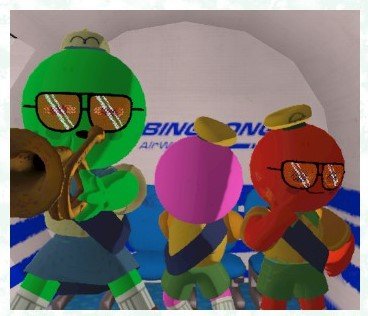
Think Peak, REPO, Lethal Company, and RV There Yet?. Each massive hits, each bolstered by its ability to facilitate mildly entertaining stream clips for distribution on TikTok and YouTube.
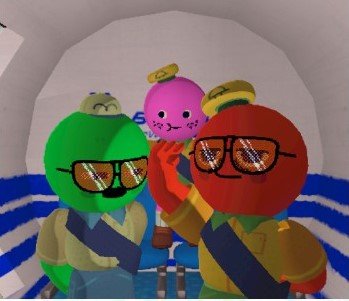
Perhaps that’s too cynical a view, but it can’t be ignored that much of the success of these games originates in their popularity amongst Twitch streamers. Whether that be Among Us back in 2020 or Peak this past year, stream viewers love to see their favorite creators team up to (often poorly) complete simple gameplay tasks.
But this magazine isn’t about streaming, it’s about indie games. So, why else may these games be successful, and why should small teams keep making them?
Firstly, they’re accessible for players and developers alike. These games are small, compact experiences, and so small teams are able to produce them more quickly and effectively than they would a more ambitious project.
In these games, mundane experiences are common and celebrated. For example, Sledding Game, Steam’s Cozy Quest “Best of the Quest” winner last year, is described as “a game about sledding and hanging out with friends.”
The project, created by a solo developer, has cute, simple graphics, a physics engine that seems wrong to anyone experiencing gravity properly, and a straightforward premise that facilitates interactions between players rather than guiding them toward specific tasks to push a story forward.
Oh, and it has proximity chat.
For anyone who’s played Peak or any of the other games labeled “friendslop,” these traits should be familiar. What once were traits of a single project have now become hallmarks of a new genre, one where the goal can be as simple as “hanging out with friends.”
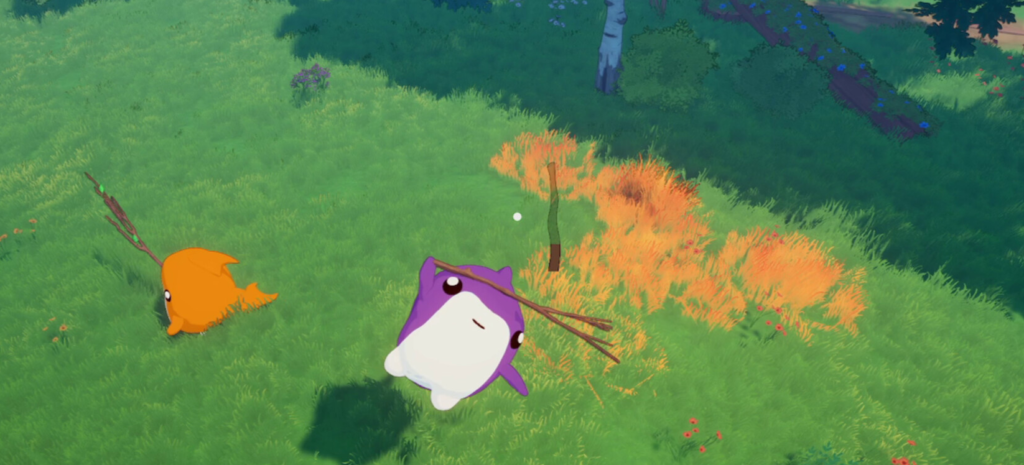
Or what about Flock Around and Stick A Round, two upcoming (and similarly named) projects with graphics, physics engines, and premises that resemble Sledding Game. Each are made by small teams and are centered on a mundane goal that is second to the interactions between players.
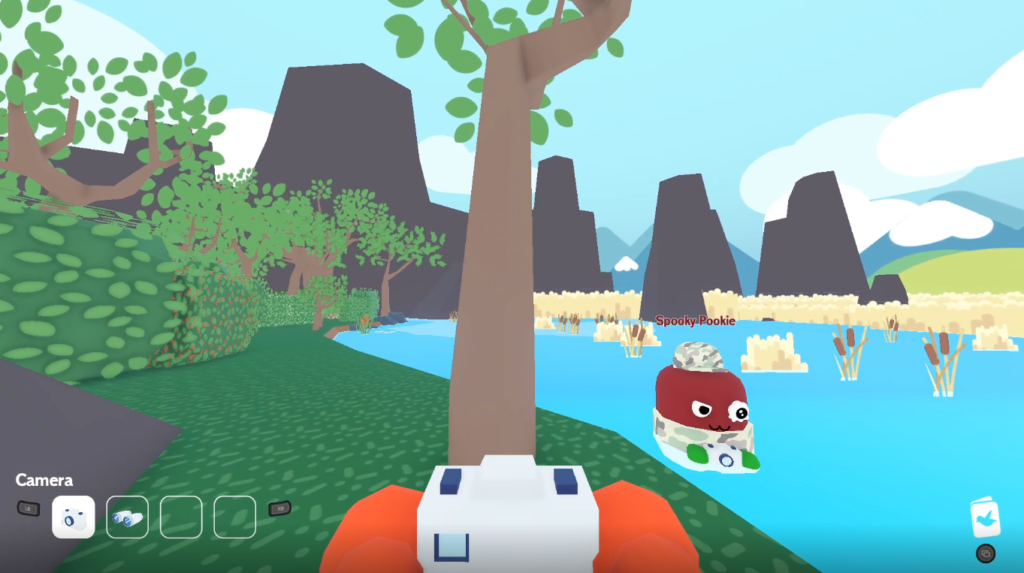
In the former, players are bean-shaped birders taking pictures of birds in a park. Each picture earns the player money, and each bird is accompanied by a silly description that adds to the somewhat surreal experience.
Proximity chat is in full effect here too, though the developer demonstrates in one of their social media videos that it actually scares away the birds. A novel (and shockingly realistic) use of the mechanic, to be sure.
In Stick A Round, players take control of small, simply rendered animals in a park, tasked with finding the best procedurally generated stick with which to beat the tar out of their friends. In many of the developer’s videos on the topic, they focus on the code required to randomly generate these unique sticks, something that comes across as genuinely impressive and time consuming.
That leads to the next reason these games are good for both players and developers. They’re fun. For a developer, the simple scope means that time can be spent perfecting whichever systems drove the creation of the project in the first place, whether that be an engine that generates 600 trillion unique sticks or new descriptions of birds.
Kaman seems to agree, saying “these games aren’t trying to be Game of the Year, they focus on delivering a specific experience.”
Instead of providing a tightly curated story and specific goals, games like Peak and Stick A Round are attempting to redefine what video games are by focusing on why people play them in the first place: the desire to have fun.
Traditionally, video games have had very clear and distinct goals, and every action in the game moves the player closer or further from those goals. In Pac-Man, players must clear each maze of Pac Dots and avoid ghosts. In Stardew Valley, the farmer must make their grandpa proud – a task that may be daunting in the real world, but in this case, the wiki has a guide.
In Peak, players are nominally required to climb a mountain, but the fun is more in the ways that players achieve that goal. Many play sessions consist of scouts stealing from each other’s backpacks, getting stuck in odd places, and falling to their deaths in ridiculous ways, screaming incoherently through proximity chat as they do.
In other words, players are able to make their own fun.
Finally, the main reason that these games are successful is that they bring players together. They don’t cost half a week’s worth of groceries, they aren’t overly competitive, and they force people — best friends and online acquaintances alike — into the same lobby, where they have no choice but to communicate with each other.
Instead of yelling at teammates over their choice of superhero or lamenting how an unskilled friend will ruin their ranking, players are instead allowed to just let go and have fun blowing on a bugle or swinging a mug of cocoa around.
That openness to play for its own sake, that spontaneous chaos that can only come from human interaction, those are the things that indie developers should be focusing on right now. The industry at large is in a tailspin, with layoffs and the proliferation of generative AI in games – the truest form of slop.
It’s nowhere else but the indie gaming space, and by no one else than a guy with Unity open on a dusty laptop, that the most genuine and fun experiences can be created. As massive tech companies seek to siphon our ideas and market them back to us, as game companies raise their prices more and more for less satisfying products, we must resist in any way we can.
In many ways, it just might be resistance to pick up a game for less than $10 where you sled, or whack your friends with sticks, or work together to climb a mountain. In those games, the fun is found mostly in the time spent together.
It might be resistance to make a game like that, too. So, because big tech doesn’t get it: bring on the friendslop.