The Legacy of SomaSim
The highs, lows, and hopeful future for Chicago simulation legends
by D. Myerscough
Kasedo Games was not contacted for comment regarding this article. Any additional statements by the publisher will be added here should they appear.
When it comes to independently developed simulation games, a name that comes up often is SomaSim. The Chicago-based studio has been at it for over 10 years, and in the wake of a less-than-satisfying launch, they’re looking for a new direction.
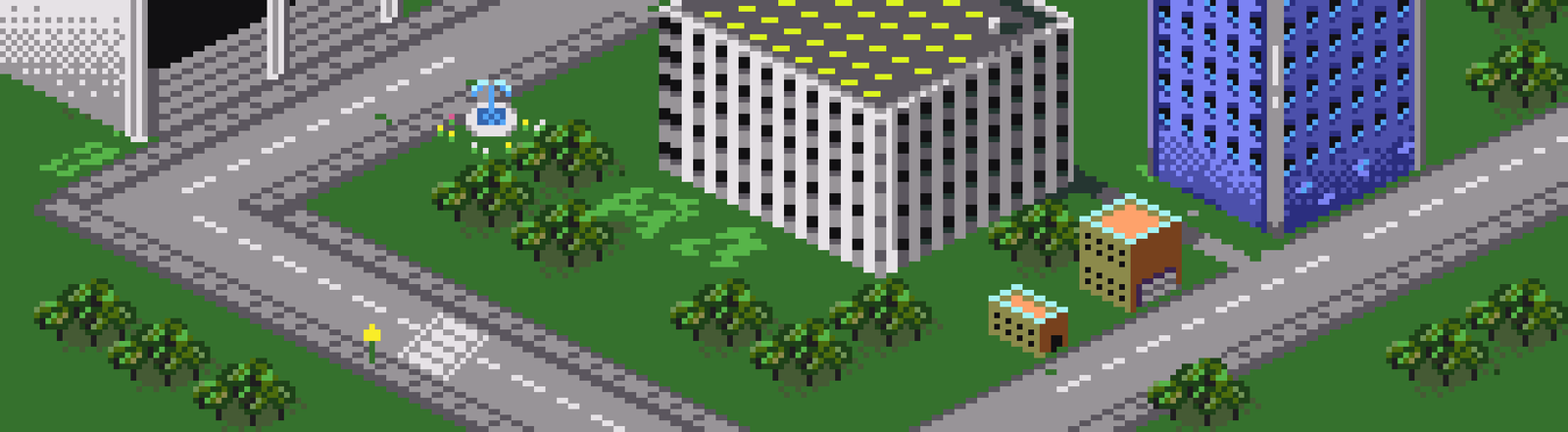
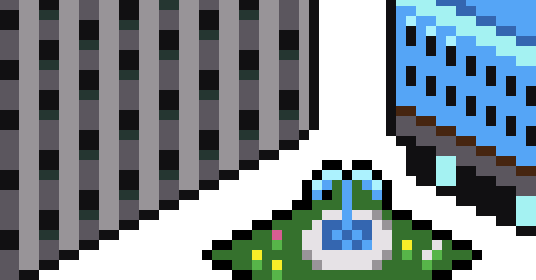
The studio’s major success began with Project Highrise, their second effort. Partially inspired by the founders’ time living amongst the skyscrapers of the Chicago Loop, the game garnered a loyal fanbase and positive critical attention.
Matt Viglione, lead designer at SomaSim, said that the response to that game was gratifying, with the team spending the first three months almost entirely on engaging with their new players.
“Those couple of months post-release were a lot of fun,” Viglione said. “That time went a long way to building up a lot of goodwill.”
That goodwill carried over into the team’s next project but stalled out somewhat when they came back for round four. Rise of Industry 2 is still SomaSim’s most recent release, leading both to the studio’s restructuring and a split with their longtime publisher, Kasedo Games.
About the development process, release, and aftermath of Rise of Industry 2, Viglione was succinct: “The whole thing was fucked.”
Projects on the rise
In contrast to the current situation, picturesque beginnings heralded the studio’s early success. 1849, their first offering, is a city manager set during the California gold rush. Partners Viglione and Robert Zubek conceptualized the game while driving back from Thanksgiving at a friend’s house in the Sierra Nevadas.
Players are tasked with creating and managing a booming mining town in an isometrically-rendered California that resembles early PC management games like the Oregon Trail series. Viglione said that the game was deliberately retro, an attempt to recapture the kinds of games the two fell in love with as children.
“When you drive up there, you drive through the areas that were major gold mining towns in the 1850s,” Viglione said. “I was looking at all this stuff and I’m like; there’s a game out there in those hills.”
Development began quickly after the pair returned to San Francisco. They funded 1849 themselves, intending to complete the game within a year, more out of necessity than anything else.
“The first game we wanted to make was actually Project Highrise, but that was going to take two years to make,” Viglione said. “And I looked at our bank account. There wasn’t two years of money there.”
Before making the transition to indie game development full time, Viglione worked in marketing in Catholic Charities in San Francisco. He has an exacting eye and a cutting sense of humor that leaves the listener never quite sure what he’ll say next.
Upon release, the pair was unsure if they would have the runway to make another game but found themselves so inspired after their recent move to Chicago that they gave it a go anyway.
Project Highrise began as a conceptual reboot of SimTower, an idea so obvious that Viglione was concerned another team would beat them to it. After completing a majority of the project, SomaSim began speaking to publishers, eventually landing on Kasedo Games, an offshoot of Kalypso Media, the publisher responsible for the Dungeons series.
For the publisher, Project Highrise was their first major project. For SomaSim, it was a lifeline.
“None of us got paid when we were making Highrise,” Viglione said. “We were all barely coasting off 1849, and when that first check from the publisher came for Project Highrise, we really needed it.”
None of us got paid when we were making Highrise. We were all barely coasting off 1849, and when that first check from the publisher came for Project Highrise, we really needed it.
-Matt Viglione, founder of SomaSim

Because of the precarious financial situation that Project Highrise was developed under, Viglione said the team always had the feeling that the project may be their last. That desperation, he said, may be what sold the publisher on the game.
What sold audiences on it, however, was the classic SimTower elements combined with an easy to learn, hard to master gameplay loop. After its PC launch, the game would be ported to tablet and mobile devices at the behest of the publisher.
Viglione said the process took a year and required SomaSim to redesign the user interface of Project Highrise five times in order to accommodate the play styles and limitations of the different platforms. That harrowing process is not one that he would recommend, but he stands behind the final result.
“At first, I didn’t want to do a mobile game,” Viglione said. “But I’m a game designer, and as soon as I stopped fighting the problem and started embracing the challenge, things got better.”
SomaSim’s next offering would be City of Gangsters, another management game predicated on the idea of playing as Al Capone’s accountant. The game is a mix of a social and physical economy where players have to create social bonds in order to make and spend resources.
“It was sort of this idea of how you had to know a guy or gal to get stuff done during Prohibition,” Viglione said. “It’s a combination of a physical economy and a social economy and the gameplay occurs at the nexus of those two things. They have to grow together.”
This project would not reach the same success as Project Highrise but was still able to create more opportunities for growth as a studio and court a devoted fanbase.
Up until this point, SomaSim had been a small team, made up mainly of Viglione, Zubek, and a few artists. Because of that size, the team operated mostly on a revenue share model that linked the hours spent working on the game to the percentage of profit the team member would receive after launch.
“It was my arrival that kind of broke that model,” Gabriel Firmo, lead engineer at SomaSim, said.
Toward the end of the development process on City of Gangsters, Firmo, a recent Northwestern University graduate and a former student of Zubek’s, was brought on as a full-time, salaried employee.
Firmo is an upbeat figure made up of contradictions, with smiling eyes positioned under perpetually furrowed brows. When asked about his history as a developer, he sped past much of his early life and focused instead on a student game he said was an “absolute nightmare,” but convinced him that pursuing game development was the right path for him.
The meeting between Viglione and Firmo was one the two treat like an odd stroke of fate, with Viglione calling Firmo “annoying” in one joking breath and arguing over who was most lucky over his hiring at SomaSim in the next.
Once City of Gangsters launched, the team created five DLC packs and then moved on to conceptualizing and pitching their next project, originally intended to be a post-Soviet sendup of a city rebuilding game.
“We pitched it to Kasedo and like the next day, they came back with an answer saying they thought it was too grim,” Viglione said, rolling his eyes. “They said, why don’t you make Rise of Industry 2 for us?”

We pitched it to Kasedo and like the next day, they came back with an answer saying they thought it was too grim. They said, why don’t you make Rise of Industry 2 for us?
-Matt Viglione, founder of SomaSim
Industrial revolution and its pitfalls
In 2015, another management game was being developed by a small team of independent developers: Rise of Industry. Alex Mochi, the head of now-defunct Dapper Penguin Studios, said in a YouTube video that he began developing the game with “a couple of nice guys from reddit,” before shifting his focus to itch.io and Steam. By the end of the game’s life span, he said he had 20 employees on his payroll.
Partway through this process, Mochi signed a deal with Kalypso Media consisting of a $75,000 advance and a 50/50 revenue split with the publisher until they recovered $100,000. He described that deal in his video as “fair,” but goes on to characterize the relationship between Dapper Penguin and Kalypso (then Kasedo Games) as strained, ultimately calling the deal a bad one.
Speaking to GamesIndustry.biz, Kasedo Games confirmed the details of the deal, but emphasized that it was “a licensing agreement in which the developer committed to secure all development funding and asked for a small advance.”
Mochi would go on to claim that after Rise of Industry launched in 2019, the support from Kasedo Games evaporated, and that once the publisher had recouped their earnings, they funneled the money from Rise of Industry into other games like Warhammer 40,000: Mechanicus.
Kasedo Games also disputed those claims.
Once the relationship between Mochi and Kasedo Games surrounding Rise of Industry had well and truly broken down, Mochi claimed to have been over $100,000 in debt, holding his game together with “duct tape and 80 hours a week.” Eventually, he decided to sell the IP for Rise of Industry to the same publisher he said abandoned it.
In 2021, Mochi and Kasedo Games penned a deal that paid Dapper Penguin $5,000 for the IP itself, then $45,000 in advanced sales and royalties for the now four-year-old game. The publisher said in a statement to GamesIndustry.biz that they had not intended to buy the IP until Mochi approached them several times. The developer disputed that claim in a reddit thread, saying “I felt like I was being manipulated by my own publisher so I’d be forced to sell our existing IP.”
Mochi would go on to publish another game under the Dapper Penguin name in conjunction with Kasedo Games, called Recipe for Disaster, before shuttering the studio and creating several postmortem videos and posts attempting to explain what went wrong.
When all was said and done, Kasedo Games owned the code, assets, and all other aspects of Rise of Industry, setting about to make a sequel that Mochi said in another reddit post lacked “testing, polish, and any real marketing.” That sequel, made without his input, several years after he had sold all rights to the IP, was created by a “new dev team,” despite the fact he claimed to have pitched “a workable sequel” to Kasedo.
A “new” studio, an old IP
The whole thing was fucked.
-Matt Viglione, founder of SomaSim
That “new dev team,” of course, was SomaSim. They had been working with Kasedo Games for almost eight years by that point and had been handed the Rise of Industry IP and funds to create a sequel for the publisher.
Because of the level of investment, the publisher took a completely different approach with the development of this project than they had with SomaSim in the past. Viglione said that Kasedo Games funded a little bit of City of Gangsters but generally left the development process to the studio because the studio was self-funding their games.
“The thing that was most fundamentally different about Rise of Industry 2 is that at the highest level, creative was not being driven by us exclusively,” Firmo said. “In some moments, it was being driven really hard by Kasedo.”
The increased publisher oversight led to a feeling Firmo described as being the developer of the game, but also not. Besides the initial pitch, Kasedo would, Viglione said, find problems with the game and instead of identifying them, would appear with multiple solutions to problems the development team didn’t even know existed.
Another massive change was in scheduling. Both Viglione and Firmo stressed the importance of schedules to SomaSim’s past processes, but that Kasedo would often cause the project to lose large chunks of time by “attacking” the established development schedule.
About his meticulous, schedule-driven development philosophy, Viglione explained:
“When you’re making a game, you have time, cost, and scope. The only thing you can realistically change is scope. If you try to change any of the other ones, you get crunch. So, if it comes to it and the time and the cost do not allow it, it gets cut. And I like cutting.”
He also said that there was still almost no crunch with Rise of Industry 2 because he refused to engage with the practice. Instead, there were many inscrutable schedule changes.
In one instance, Viglione said that the publisher approached the team nine months into development and asked if that version of the game was representative of the final product. When they were told that it obviously wasn’t because the development schedule spanned two and a half years, they insisted that team members be moved off their current projects in order to make the game ready to show.
“So we move things around and then I tell them that it cost us two months,” Viglione said. “They were like, what do you mean that cost us two months? Because it did.”
According to Viglione, there was a lot of focus on making the project slick, consumer-friendly, and accessible to new players. He said that the head of Kasedo wanted to be able to play and understand the game right away, but that “strangely, he is not a genre player.”
Compounding a development process Viglione and Firmo called weird was the departure of Zubek, who left the studio halfway through the process. In the wake of that departure, Firmo was promoted to lead engineer in an instance he characterized as “a battlefield promotion.”
Where before Firmo was insulated from a lot of the chaos that meetings with Kasedo Games had become, now he was required to sit in and discuss endless milestones and deliverables that became less and less realistic the closer the launch date became.
“It very quickly became a game of musical chairs that basically no project could survive intact,” he said.
It very quickly became a game of musical chairs that basically no project could survive intact.
-Gabriel Firmo, lead engineer
Nick McKay, another software engineer on the project, agreed with this assessment, saying: “The last few months were pretty stressful. The publisher basically went from almost ignoring the project to full micro-management. We were pushing through major features and revisions up until the ship date and past it.”
Features like the sandbox mode, which Firmo said was supposed to be developed closer to launch but was pushed forward at the behest of the publisher, launched in a much worse state than the team ever imagined. Worse were the two Steam Next Fests that the game was slated for, one they were only informed of a week in advance.
Firmo also seemed frustrated by the process of developing the console version of the game, something that was done in three iterations and that the team never planned for.
“Every time we started undergoing console work it would be interrupted by something, and it would not be interrupted by something that was an emergency that we could handle,” he said. “It would be interrupted by a nonnegotiable demand that was top down.”
In addition to all this, Firmo was also forced to leave the country during the development of Rise of Industry 2, a situation that resulted from him never attaining permanent legal status in the United States, despite having lived and attended school here for most of his life.
“We had basically timed it all out that I would go back to Brazil for a month around six months before release,” Firmo said. “And then I would come back on my green card, but that green card failed for reasons of my lawyers not being very good at their jobs and also the U.S. government making the whole immigration process a hellish nightmare.”
While the studio adjusted in order to make it possible for Firmo to work remotely, the time difference and physical distance from the other members of the team put further stress on an already difficult development.
Then he was detained by CBP when attempting to reenter the country on a B-2 Visa, which is explicitly intended for foreign nationals traveling for short-term business reasons. Firmo was mocked by armed agents, kept in a windowless cell at O’Hare airport for hours, and was eventually returned to Brazil without his passport, which was confiscated by CBP and handed to the pilot of the plane.
Firmo was distressed while explaining this, speaking in a near-monotone and avoiding eye contact. He went on:
“They have me sign a document that they do not allow me to read and then they take all my things, my phone, my laptop. They forced me to give them the passwords so they could go through my stuff and they canceled my visa. They made it so that it is very, very difficult for me to return to the U.S. or get any other visa approved in any other circumstance.”
Firmo let out a humorless laugh after that. “So that was the emotional context of what was going on with me three months before the release of Rise of Industry 2.”
With problems like that compounding by the day, Firmo and Viglione were concerned the game wouldn’t arrive on time. The former recounts a meeting where he sat down with Viglione and said that a single additional schedule change would lead to the team missing their planned release date.
Despite it all, on June 3, 2025, Rise of Industry 2 launched to mixed reviews.
How (not) to market a game in 10 days
“For the past eight months or so, I’ve been postmorteming this in my head every time I can’t sleep or that I’m sitting on the L looking out the window,” Viglione said, looking away and sighing. “I’ve only recently started moving into the acceptance phase of the grieving process.”
Upon release, negative reviews of the game were focused mainly on technical issues like bugs and crashes and the differences between the first and second installments of the series.
About the technical side of things, Firmo laughed a little when he said that the game releasing was “a miracle,” and characterized the fact the game launched in a playable state at all as an “act of divine kindness.”
However, he is not without regrets. While he thinks the game is fun and has played it both on console and PC, there are issues with it that he wishes could have been addressed before launch.
Viglione was terser when he described the launch and the response from fans of the first Rise of Industry: “I’m never making a sequel again.”
I’m never making a sequel again.
-Matt Viglione, founder of SomaSim
More specifically, he intends to never touch the IP of another developer, especially one that he describes as having “an antagonistic relationship” with the publisher who owns that IP. Further, Viglione remarked that Kasedo did next to nothing to address their relationship with Mochi and the impact it could have on Rise of Industry 2.
“They entirely failed to anticipate what the response would be; and it was entirely expectable,” Viglione said. “I had asked them numerous times what we were doing on this front, and they basically just said to leave that with them.”
According to Viglione, simulation games are always hard to market, doubly so when the game is a sequel. Kasedo, in his view, did almost nothing to prepare the game for release, a failure that created much of the initial backlash to the project.
He said that while there were many issues and hurt feelings around the release, he was ultimately happy with the game and assumed that the publisher was happy with it as well.
“I can’t really speak to their motives or what their thinking was, but they had a lot of opportunity at every milestone to tell us that this wasn’t the game they wanted or that they wanted to make significant changes,” Viglione said. “We never heard that.”
Firmo agrees that much of the marketing of the game was botched, but that players are responding more to unaddressed problems with the game than anything else.
“As much as I was happy with the game, it does reflect a troubled development cycle, and that comes through to players,” Firmo said.
Viglione pointed to the inertia of Steam reviews, saying that they tend toward negative unless the developer does something to push them in a positive direction. That comes from the experience of marketing City of Gangsters, another game that had a lukewarm release but was able to grow a loyal player base through constant updates by the dev team.
“There’s still a lot of chatter in the player Discord,” he said. “Like, a guy in Korea translated the whole game into Korean, and City of Gangsters is 650,000 words in full. That was like two weeks ago.”
When player response to Rise of Industry 2 was lukewarm, Viglione said Kasedo and SomaSim had the opportunity to “kick the engine over,” but that the studio had no bandwidth or money to do the kind of community response the game needed and Kasedo chose not to engage.
“At some point, and I could not tell you why, it seems they have washed their hands of the thing,” he said.
Many of the choices Kasedo made after the release of Rise of Industry 2 are confusing to Viglione, something he is not shy about pointing out. He also said that many of the choices will likely remain a mystery because of the departure of an executive at the publisher.
“It’s going to be like the Berumuda Triangle, I think,” he said.
One thing that isn’t a mystery to Viglione, though, is the motivation behind the publisher asking SomaSim to make Rise of Industry 2. He said that the original question posed to the team by Kasedo wasn’t just whether they would like to make Rise of Industry 2, but whether they would like to make Project Highrise 2 or Rise of Industry 2.
“Making Project Highrise 2 would have probably involved relinquishing the IP, which is what they wanted,” Viglione said.
Without ownership of the Project Highrise IP, the publisher was stuck marketing a game they weren’t quite sure how to sell. At one point, Viglione said the community management from Kasedo was so bad that he asked one of SomaSim’s 3D artists to do some community outreach and that he “did a better job than Kasedo did.”
Ultimately, Viglione said, Kasedo got what they ordered with Project Highrise 2, they just weren’t sure what to do with it.
Out in open water and swimming down
After the difficult development cycle and unsatisfying launch, both Viglione and Firmo were unsure if they even wanted to continue making games.
“After the game came out, we had to go through the layoff process where I had to lay three people off,” Viglione said. “It was the hardest thing I’ve had to do in a very long time.”
During his time at Catholic Charities, he had participated in a round of layoffs that made for an incredibly difficult two months of work, but he said the summer after the release of Rise of Industry 2 was worse because he had to lay people off that were his friends and completely change the vision he had of his studio.
“I went through a lot of anger,” he said, eyes poised to make another joke that didn’t come. “I would call Gabriel and walk around the block nine times while I yelled. There are probably people who live in North Center who have seen me walking around in May with headphones on yelling and swearing and muttering under my breath.”
For Firmo, things were similarly emotional. He was back in Brazil permanently and was ready to cut any and all ties to the U.S. after his abuse at the hands of CBP.
“I was like, maybe I should look for something else because working from home is not great for my health and I was just generally in a mood to cut all my ties to the United States,” Firmo said. “So, I was having conversations in my life about moving on, and when I raised the topic with Matt, he said he was about to invite me to a meeting to pitch me on the next thing.”
That statement confused Firmo, who had assumed that his employment was predicated on being based in the U.S. Viglione, though, had already begun planning the next step for the two of them.
Smiling in his usual wry way, Viglione spoke with complete sincerity to Firmo: “You’re not getting rid of me that easily.”
From that point, the two began planning what they were going to do next, with conversations about how to do things differently. How to do things better.
“Rob, my partner in life as well as in starting the business, told me that I needed to take time off and I should not plan on working until 2026, and I think Gabriel’s brother told him the same thing,” Viglione said. “We mostly ignored them.”
Starting in Nov. 2025, Firmo and Viglione began brainstorming what they called “basic, cool ideas for games.” Each time they started to iterate on an idea, they decided to make that game. The process repeated four times.
At the beginning, Firmo was concerned that the differences in sensibilities between him and Viglione would lead to friction, but was pleasantly surprised to find they were excited about a lot of the same things.
“When he approached me about being on the creative end and working in an equal partnership, I was pretty shocked,” Firmo said. “Before, I had just been helping him execute his vision, but what I have been really excited and hopeful about is that the process went way easier than expected.”
Viglione agreed, saying that their focus in this new era of SomaSim has been pushing the boundaries of what game design could be. The pair have been “mushing things up” and coupling simulation strategy with innovative processes from other media. Essentially, they are trying to move as far away from the development of Rise of Industry 2 as possible.
It’s been exciting to do, because with Rise of Industry 2, it wasn’t real game design. We’ve been getting back to thinking about core mechanics and base principles again. It’s been fun.
-Matt Viglione, founder of SomaSim
“It’s been exciting to do, because with Rise of Industry 2, it wasn’t real game design,” Viglione said. “We’ve been getting back to thinking about core mechanics and base principles again. It’s been fun.”
Core mechanics are not the only thing the two have been trying to get back to. Viglione said that one of the things he’s trying to recreate is the unsure, desperate feeling he had during the development of Project Highrise.
“I know it kind of sounds strange, but I want to get back to that ‘I don’t know if we’re going to make another game again’ feeling,” Viglione said. “That was what Project Highrise was, and that’s sort of the vibe I’m looking to get back to.”
That desire to get back to scrappier indie development is felt by Firmo as well, who said that he really wants to push SomaSim’s sensibilities and land somewhere weirder and more hybrid.
“We want to really explore the space and evolve the genre,” he said. “I think people in our niche will be happy, but I think we’re also out in open water and swimming down and figuring out what there still is to discover.”
When asked whether the pair would consider working with a publisher again, they both laughed and spoke haltingly about economic realities and the troubles of doing your own PR. Finally, Viglione made a definitive statement:
“If I can find a partner that doesn’t make me feel gross and that is willing to jump in with us in the way that an artist or other contributor would, then yeah, it’s something that I would consider. But it’s going to be on our terms, not theirs.”