Community feature: Lunar pSychosis
by Seb Galvez
This article was originally published in Issue 10 of the ICG Zine, December 2024. It was reformatted in January 2026, but has not been edited further.
In this interview, Dani Orizaba describes the process and inspiration behind their newest single, “Lunar Psychosis.”
Seb: So, to start, congrats on the release of your single, “Lunar Psychosis.” How are you feeling?
Dani: Thanks, I’m doing good! Really excited about the release, really looking forward to what I’ve got cooking coming out.
Seb: So how long have you been working on this album?
Dani: I started on it because I was like, I don’t have anything to do on July 4th, so I was bored and I did a song; it just kind of grew from there.
Seb: You’ve spent a lot of time in the indie game art scene in Chicago this year. Is there any way that that has informed the music, even though it’s a different medium? Is there any way that those two have been connected for you?
Dani: Absolutely. I mean, the first thing that comes to mind is just the raw creativity in the game dev community. Being around that is inspiring me to create, so that’s a huge part. There is… I’m not gonna say any individual that stylistically influenced me, but watching people make music in particular.
I’ve gotten this a lot about my music and I kind of consider it the case too, that my stuff sounds like video game music.
Seb: Oh yeah, fully agree.
Dani: That influence clearly comes through. And that’s been the case before Indie City Games, but Indie City Games hasn’t subdued that.
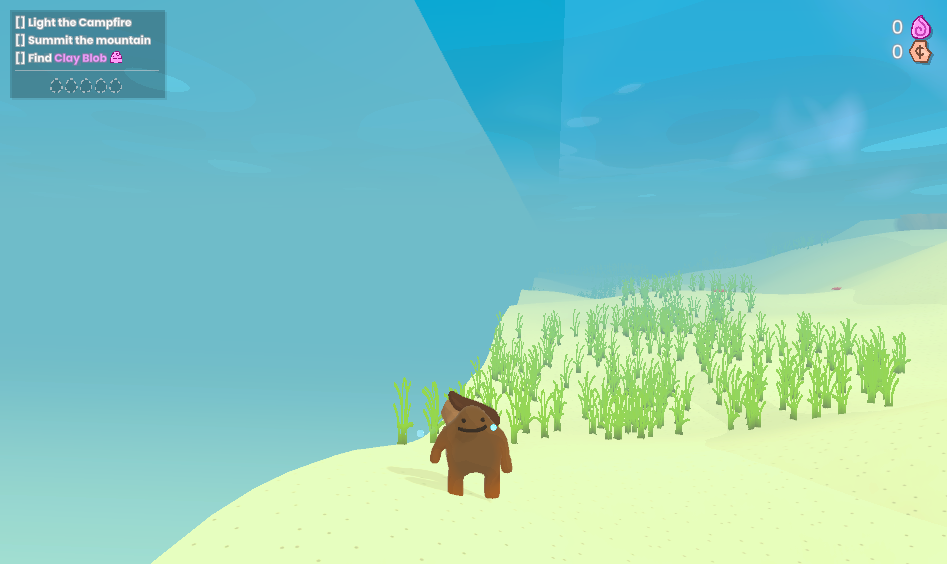
Seb: Yeah, there is definitely something to working as part of a collective or in a collective art space, even if you are all working on completely separate ideas or mediums. To touch on the space theme, I do know you’ve dabbled with a Game Boy game themed around space over the past year; did these two touch in any kind of way or is it an undercurrent in your own imagery?
Dani: It’s a little bit of both, because like, I am obsessed with space. I’ve enjoyed space on one level or another and been fascinated by it ever since I was a kid, but especially since about three, four, or five-ish years ago, I really just dove into loving it and sci-fi and astronomy and everything related to being off the ground, basically. And that hasn’t slowed down.
To give some context into where I’m at in my musical journey, this year was the first year in about five years that I’ve really actively made music because I had this personal toxic relationship with making and listening to music that I needed to work through. And working on the Game Boy game was one of the big steps into getting back into making music because the limitations of the Game Boy, the limitations of the system, really forced me to think musically and not be production minded, where I’m like, “it’s going to be bleeps and bloops. It’s going to be three notes plus a noise channel.” It’s gonna sound like that.
There’s not really much I can do to the actual sound, so I don’t have to worry about if it sounds professional or amateur or whatever, I can just make music that sounds fun and then play a game with that in it. And that was just a joy to do and kind of brought me back into the joy of making music instead of the stress of making “good music.”
Seb: No, absolutely. I think it’s one of the reasons I love the engine as well, because without limitations it’s so easy to sink into endless pushing around of the subject. If you’re painting, it’s easy to just nudge the paint around on the canvas ad nauseum and never really get to a concrete point of identity or even just say that it’s finished and leave it alone.
So, I’ve found that those limitations helped me in my work as well to really hone in on specific ideas. And then I can later extrapolate from those, even if I choose to work in something more complex.
Dani: Yeah, one of the specific things that it really helped with was one of the things I enjoy about producing music, which is sound design — designing synths, designing textures, and designing soundscapes as a part of my music. It takes a lot of fiddly experimentation and production knowledge.
And I fell into this trap where I was like, I have to design my own synth, new, from scratch, for every instrument I use, ever. And that was exhausting and demoralizing and hard. Doing the Game Boy game was like, wait, I have three notes that sound almost exactly the same. And I can still do cool textures and sounds with this.
It just shifted my focus, it was like, wait, I can reuse instruments, and I can use preset synths, and then modify those, and then reuse synths between songs, and that actually adds a sense of coherence between a lot of my songs, where there’s similar sounds throughout. So, you can kind of feel the same influence in it, and that’s directly a result of doing the Game Boy game.
Seb: Absolutely, that makes a lot of sense, those restrictions force you to find your identity a bit more. So, you also do visual art. Over the last year it’s been a lot of pixel art, specifically. It’s often not game art, despite being pixels, right? Like, it’s a lot of fully illustrated panels, landscapes or portraits. Do you feel that that connects with your music in any way? Is it entirely separate?
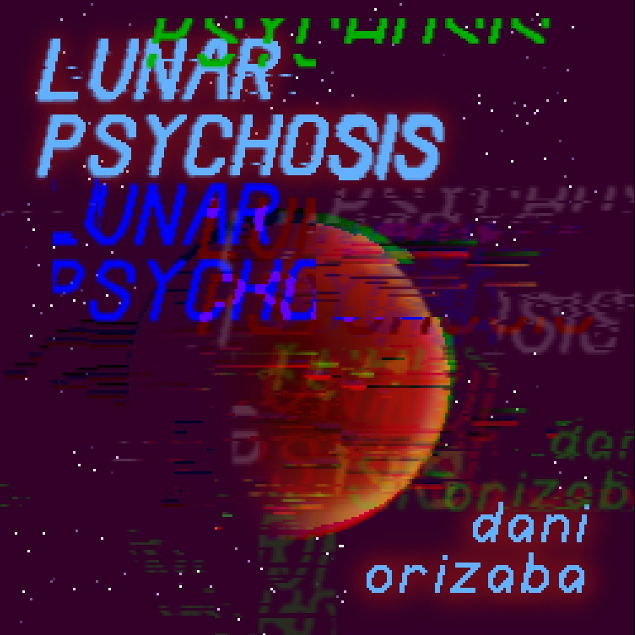
Dani: I have a couple thoughts on this, but the immediate obvious answer is I make art for my music. Like I made the single art for “Lunar Psychosis,” and I made it for the singles that are going to come out. I made the album art and that’s been the direct connection, but like indirectly… This year has been very much a return to creativity for me and everything that’s brought me back to music has also brought me back to art.
I don’t have a history with visual art like I do with music. My history with visual art is trying for a week and then giving up for three years and then trying for a week and then giving up for three years, and this is the first time I’ve not given up for a week. It’s the same stuff that brought me back into music that brought me into art, too.
Seb: It is interesting because pixels tend to be inherently restrictive, right? So there’s that undercurrent of choosing systems that have inherent limitations built into them.
Dani: Absolutely. I’ve been doing pixel art on and off for the past two or three years. But doing the Game Boy game was really what made me start focusing on pixel art as its own thing and not just as a means to game dev ends.
It was those limitations, like the tile limitations, like the size of the tiles and the amount of tiles and the color limitations that really pushed my pixel art skill and leveled me up in a way that I was able to take with me to more complex pieces.
Seb: Yeah, and the growth shows in the complexity of the pieces. The number of pieces you’ve shown over the past year has increased dramatically.
Dani: Thank you.
Seb: So this is more my personal read, but would you say that there’s a lot of optimism in your work right now? Because I think despite the title of the track, there is this optimistic undercurrent to the sound and similarly, with your art. There’s a lot of love for the city or smaller, more intimate settings.
Dani: Yeah, I would say that that’s definitely an accurate read of the situation. Like if you’ll allow me to talk about my album for just a little bit, “Lunar Psychosis” is kind of the climax of the album before the final track. The album is about my experience with bipolar disorder and it follows along a single cycle. So a cycle of depression and a cycle of mania.
And this, the song I just released, is kind of the end of everything where it’s getting really bad. But there’s a little bit of hope on the horizon, and I really focus on that feeling of hope throughout the albums, because that’s an important aspect of my mental health — there’s always an ability to find hope in the different stages.
Seb: Yeah, I think that’s a tack that’s not often taken with discussions on mental health and art, which often have an inherently… I would just say negative downturn in how they’re portrayed rather than trying to demonstrate the complexity of it, it’s not something that you defeat, or something that inherently always has to drag you down, moreso something that you learn to live with, that becomes an incredibly complex relationship on its own.
Dani: I think along with that, like with the music I’ve been making this year, there’s a lot to wrestle with. And it’s all lyric-less, so it’s very much the emotional wrestling, but it’s very much wrestling with mental health and identity and hope, both losing it and gaining it. And there’s just a lot of interplay, I think, in my music with all of those things because it’s what I’ve been experiencing and thinking about this year.
Seb: I’m excited for the album, if the single’s anything to go by! To talk video games, are there any that you have found have particularly impacted you this year?
Dani: The obvious answer is one you recommended to me, which is Norco. That game just blew me away. With the vibes and the story and the art, and the music was great too, honestly, very inspiring. I don’t really have a history of playing point and click games, so it was a nice little foray into a new thing for me. And it was like, oh, hey, this is a really fun way to play a game. I want to explore this more, both in playing and making games with this kind of format.
Seb: Can we expect to see a point and click project from you?
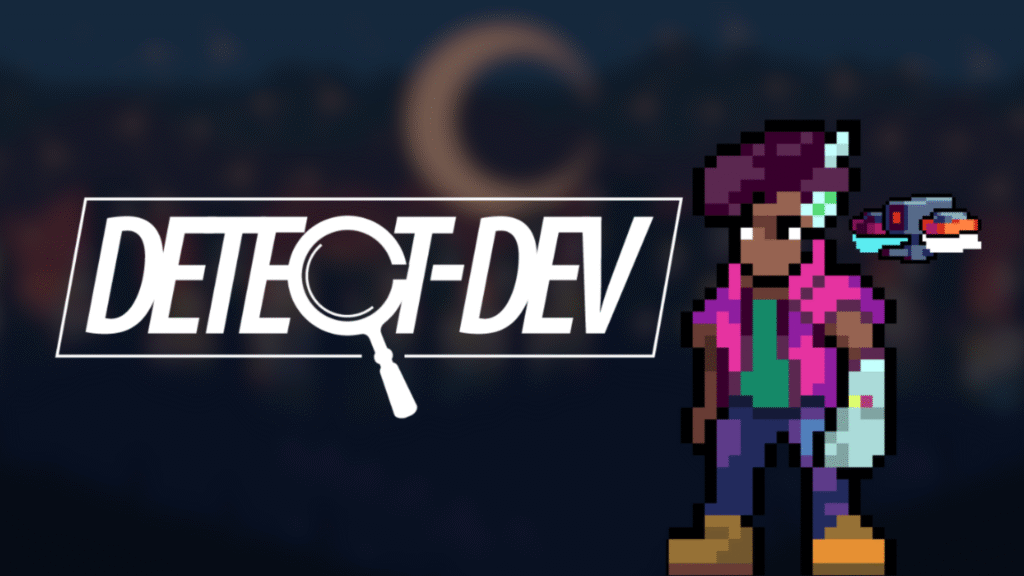
Dani: I have one in the works, don’t know how long it’s gonna take because of the art. Might take a while.
Seb: Oh yeah, no, that’s the nature of it, you don’t double your timeline in game dev, you triple it. Do you want to talk about it at all, or is that still under wraps?
Dani: I’ve been talking about it incessantly at meetups and stuff and in the [Discord] server, so I’m happy to talk about it here. The spark that got the idea was like, okay, Norco is sci-fi New Orleans, and I’ve for years been saying, I want more games set in Chicago. There’s not enough games set in Chicago. There’s not enough media set in Chicago, but games in particular.
And I was like, what if I did sci-fi Chicago? What kind of story do I want to tell in sci-fi Chicago? What kind of people live here, you know? And it’s been exciting exploration. It’s still very early stages but coming along nicely.
Seb: So when you say sci-fi Chicago, what does that mean to you? Because sci-fi is inherently political, right? Even outside of more overt sub genres like cyberpunk, sci-fi has still always been this lens through which we examine the present in terms of the future. What do you feel like that means to you in this project and where you see the city now versus how you see it in the future?
Dani: I mean, to some extent, I haven’t discovered what I want to say yet, because to go back to my album real quick, I didn’t come up with the story and then write songs that fit that; I just wrote songs that felt good and then messed with the track order and then was like, wait, this feels like bipolar. And I kind of want to approach this game in a similar way, if I can.
Where I just kind of do things that feel good, and see where it takes me, and then try and build a message out of that. Once I get there, I can intentionally refine that message. So the only thing I have is I want it to be a somewhat hopeful future, not necessarily a dystopian one.
Story-wise, I want to focus more on personal relationships and individual experiences, more than grand adventure in a sci-fi world. Relationships between people, relationships between people and their city, both of which are just things I’ve been thinking about a lot the past couple years.
Seb: The Midwest is a place where you tend to live and die by your relationships and that intimacy is something that I think often gets overlooked in media surrounding Chicago and the Midwest at large, so I’m happy to hear it. I’m excited to see it in action.
Dani: Yeah, this is my first foray into writing. So it is a little scary, but it’s also exciting.
Seb: I mean, your process sounds very iterative in nature in terms of feeling your way through it and then building upon it and taking that with you into the next part of the piece, speaking especially in the case of your album. So, if it’s anything to compare, I think you’ll be fine. You got this.
Dani: I’m optimistic.
Seb: Oh, hey, optimistic.
Dani: Yeah!
Seb: Was there anything else you’d like to talk about before we wrap?
Dani: I think I’ve said this a few times recently, but I just wanted to say how much I appreciate this community. I found it just because I wanted people to do game dev with, but I feel like I found more than that. And I really appreciate the community that you guys have created and maintained.
Seb: A community, it’s only the sum of its parts, right? So even from just an organizational angle, it’s everyone involved at all parts. The past year has been crazy just seeing that constant outpouring of support, mutual support and growth over the past year. I’m really glad it’s become a place that you can draw creative inspiration and support from. I know it is for me and I hope it is for other people as well.
Dani: Absolutely it is for me.
Seb: Thank you so much. What’s your album title and release date?
Dani: I don’t have a specific date yet because so I want to do a release party like listening party for it, so I’m still working on that, finalizing details and stuff. And then whenever that gets sorted out, I’ll have a date, but I’m looking for early February.
The album is called “Virtual Nebula.”
Seb: Sick. What’s your favorite sci-fi movie?
Dani: Ah, fuck. Um. The first one that came to mind was Dredd 2012, I think. I just love the vibe of that movie. Like the “Judge Dredd” remake.
Seb: It’s so good. It’s so visually compelling.
Dani: And Karl Urban is Great.
“Virtual Nebula” by Dani Orizaba releases early 2025 on all major music and streaming platforms. Follow her on Bluesky for sick tunes and great pixels @spacedani2.bsky.social