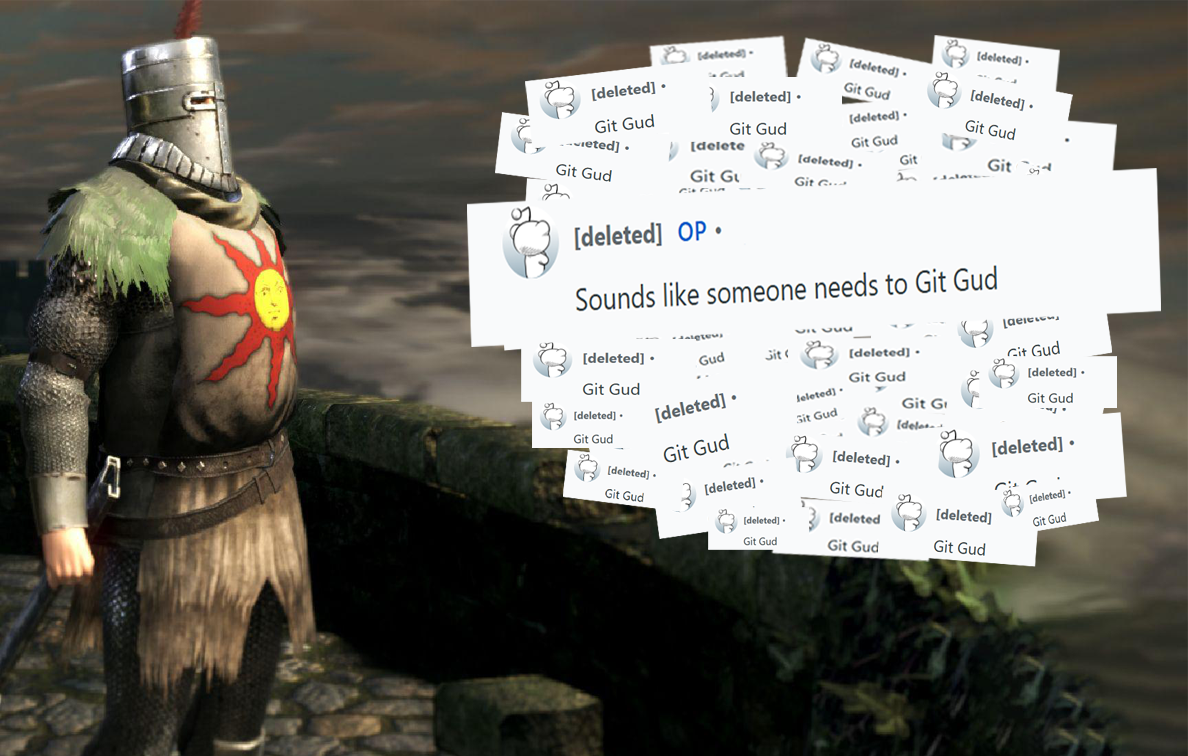
Get busy “gud”ing or get busy dying over and over
Accessibility in the FromSoftware Souls series and beyond
by Jesse Boruff
Code Vein 2 came out recently to very middling (and sometimes scathing) reviews. Complaints about lack of difficulty, less than engaging story, and an empty open world dominated online conversation. That felt a little confusing, as I enjoyed the short 50 hours I spent with the game. So much so that it became one of the only open world games I’m interested in replaying. The discrepancy between my experience and online chatter had to be interrogated, so I cracked my knuckles and began overthinking and analyzing.
For as long as the series has been a thing, Dark Souls and its spiritual successors have led the conversation around difficulty. Whether the conversation is held in bad faith or not, any Soulsborne fanatic will tell you the highest barrier of entry for the series is difficulty, after which you’ll likely hear any number of stock community in jokes. More often than not that joke will be “git gud,” a meme that originated in the early era of Souls’ popularity.
It’s an interesting phrase that I’ve interrogated often throughout my adult life. Dark Souls came into my life at a time when I needed it, where the game’s struggle and darkness felt like what I was experiencing in real life. The pain of my flesh space eased when Smough flattened me with a hammer or a Black Knight shunted me off a narrow walkway with a brisk kick.
Conventional wisdom says that absurd punishment is part of the experience of a Soulslike, is baked into the DNA of the genre. But does it have to be? In playing Code Vein 2, an experience that felt worlds more accessible than other Soulslikes, I came to realize that the whole conversation about difficulty is misguided. Instead of talking about whether the difficulty is necessary, we should take a look at the tools given to the player that allow them to tailor the experience in a way that suits them. We need to look at accessibility.
Sliders and sacred rings
For as long as I’ve been playing the Souls games – which is from the very beginning, mind you – there’s been community pushback on the idea of developers making the genre easier. These people claim that adding a difficulty slider would completely devastate the experience. And while I disagree with those people, I’m not exactly arguing for one simple slider. Humor me and let’s take a detour for a beat.
Bravely Default is a fantastic JRPG from the 3DS era with numerous characters, classes and areas to explore. Besides that stuff, one thing it does spectacularly is the difficulty menu, which contains a set of customizable parameters that adjust every part of the experience. You can adjust random encounters, turning them off or exponentially increasing the rate of them (to a ridiculous degree). You can even increase your experience gain, introducing a multiplier or completely turning it off.
Now, some folks just flat-out dislike turn-based games, and their sometimes-notorious lack of direction does create friction. Yet one thing I’ve found in numerous contemporary RPGs is the ability for players to adjust their experience to near-exact specifications. Maybe this domain holds the answers to all Soulslikes’ problems.
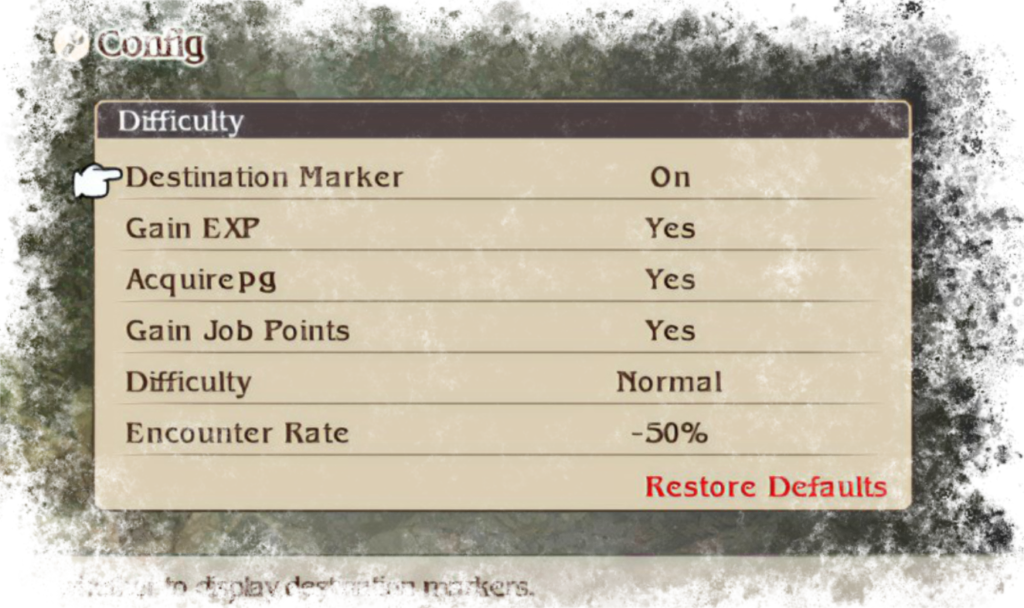
Many modern RPGs kindly offer massive pallets of accessibility options to adjust and tune the experience, but many of those options in Soulslikes are sparse, and what ones do exist are often diegetically (and cryptically) hidden from players who may need them from the outset of the experience.
FromSoftware is notorious for including almost no accessibility features in their games, but Dark Souls 2, the most obtuse and, frankly, unfair game of the trilogy, is weirdly full of almost player-friendly accessibility systems.
That game introduced the Blue Phantom ring, which summons an actual player to your world to help you when you’re invaded by another player. It’s an incredibly useful tool when the servers are active, softening the PvP for those who dislike or struggle with the system. It’s a really great inclusion, yet it’s an accessibility feature you have to be given in-game to activate. It also uses a ring slot, a purposefully limiting trade-off. And while, yes, the Blue Phantom ring is so easy to acquire that I believe anyone could do it, I’ve also bore witness to players who approached their 40th hour with the game unaware the crestfallen knight who gives you the ring was even in Majula, the hub town.
Another accessibility feature in Dark Souls 2 concerns runback. Say you have to keep running to a boss, and you’ve killed the enemies in the area 10 times. After that 10th run, the foes will stop spawning, making runback much less stressful. It also brought back healing items, something Dark Souls restricted to the Estus Flask and to a highly coveted resource called Humanity. Making the game more difficult was a breeze too, with the Bonfire Ascetic, which increased the difficulty of enemies in a given area to New Game+ levels.
That’s right, if we’re going to have this conversation, it has to go both ways. Blue Phantoms could be a menu option or a covenant players could select at player creation, and for my SL1 naked, club run sickos (I love y’all), hard modes like Demon’s Souls black world tendency wouldn’t be locked behind throwing yourself off a cliff 20 times. Accessibility goes in two directions, and that means also giving the hardcore community boss rush modes, the ability to adjust damage multipliers, or the capability to stop receiving souls for enemy kills. Oh, how many speedrun sessions and challenge live streams would have their setup time reduced if these games were just more accessible.
Finally addressing the tourists in the room
Dark Souls 2, being the first entry not helmed by the series director, one Hidetaka Miyazaki, played with a lot of what made the previous two entries into the series so difficult. Miyazaki himself must have appreciated these additions, as many of its accessibility features have made their way into his following titles in some form.
When you look at what the team kept through the years, though, it’s clear there’s been some effort by this dev team to create a more welcoming and fair game for all their players. However, many of those efforts have been contained to a few very narrow categories.
Many of the accessibility tools given to the player in the FromSoftware Souls series center around online play, rightfully so. Being invaded can feel completely random and unfair at times, especially when that invader is someone of higher skill. Accessibility tools make the one being invaded feel like they have the upper hand, though they oftentimes do not. However, there are almost no options to make the game’s PvE content easier.
Obviously strengthening the player character and outfitting them in the best and most effective arms and armor is the answer. Yet I must point out the obvious: a brand-new player is still going to slam themselves on the rocks for quite some time until they acquire any truly worthwhile gear. Sadly, there isn’t a Bonfire Ascetic that works in the opposite direction.

One solution is offered by Another Crab’s Treasure, a 2024 indie Soulslike, which adopted the RPG approach with menu options allowing the player to don armored shells that make them invulnerable, among other things. You can even give Kril a gun, which both sends him flying and spits out an insta-kill bullet that dispatches anything in the game, including bosses.
Another solution is found in the Code Vein series in partner characters and party members. They constantly accompany the player, watch their back, draw enemy aggression, and often have fun things to say while exploring the world.
Elden Ring almost mimics that system with the spirit summons, a massive list of NPC summons that can help the player out of a jam, though they are oddly restricted to certain areas of the map. They mostly act as fodder, although there are a few summons that can truly pull their own weight alongside the player, such as the Mimic Tear, referred to jokingly by the “git gud” crowd as “Elden Ring easy mode.”
Due to the nature of Elden Ring as a more open world experience, it naturally becomes the most accessible entry in the Souls series. The ability to leave a boss area to go explore and get stronger alone is a big change. The NPC helpers help too, lowering player tension and acting as the kind of assistance a player needs to build confidence to interface with the game and overcome obstacles they were unable to before, but that doesn’t mean it’s truly accessible.
My father regularly plays Diablo on the hardest difficulty, which, depending on the build, ain’t too bad. Yet I was confused watching him bounce right off Elden Ring until I realized that the diegetic, possibly-obtuse nature of FromSoftware’s titles made grasping much of the game’s concepts and systems an overwhelming prospect for him.
I do realize I’m dragging this conversation out of its muddy, shallow grave yet again seemingly just to beat its corpse with a stick, but I do have an aim here. Truthfully, I struggled for some time contemplating if I even wanted to write this article. At first, I had an admittedly contradictory opinion, believing games should be for everyone while simultaneously gatekeeping Dark Souls and its descendants. The fanboy in me felt like people who didn’t even like the Souls games were coming in and trying to mold the series into something it wasn’t. I even began to use the really nasty terms adopted by series purists, including the recently popular (and derogatory) “tourist.”
In reality, though, many of these “tourists” really get down with the vibe, the mood, the aesthetic of the FromSoftware games, or at least they would if they had the time, motor skills or patience to enjoy them. Instead of completely writing those people off, the community could welcome them. After all, what’s being lost if the barrier to entry was lowered just a little bit?
Let me take you on one more detour to a pair of examples that were given to me as the impetus for this article.
Tarnished Tanuki and Bloodborne Ninja Dogs
Super Mario 3D World was probably my favorite Mario game on the Wii U. My father and I played through the whole thing in a single weekend, and I often fondly look back at how much of a blast that experience was. Another thing I can clearly recall is the challenge. Certain levels were actually quite tricky, and there were times both of us would die enough for a specific and controversial feature to appear: the Golden Tanuki suit.
This power-up, which makes players near-invulnerable, would appear at the beginning of levels after the player had lost enough lives. I would be a liar if I said I never tried it out, and it does fill you with a bit of little brother syndrome, almost like you’ve been handed an unplugged controller while someone effortlessly autopilots their way through all the difficult parts for you. While yes, you are still maneuvering your chosen plumber/princess/mushroom mutant through the level and the levels don’t lock, allowing replays, it does still feel like a cheat. This example might seem like I’m comparing apples to oranges, and I admittedly may be doing so – Mario is a bit of a jump from Dark Souls – but allow me to connect a few more dots.
Ninja Gaiden Sigma for the XBox was undeniably badass. As a youngster I’d balk at the buckets of blood and gore most other teenage boys enjoyed. I was garbage at it. Over and over again I’d desperately try and defeat the ninjas in the first level and fail, realizing that maybe I just didn’t have what it took to hang with the game. The thought crushed me. I loved the aesthetic, the graphics, everything about the game enthralled me. As I continued my seemingly fruitless endeavor, dying once again, instead of the now-familiar “Game Over” screen, I was instead greeted by a hilarious (albeit embarrassing) popup message: “Ninja Dog difficulty Unlocked.”
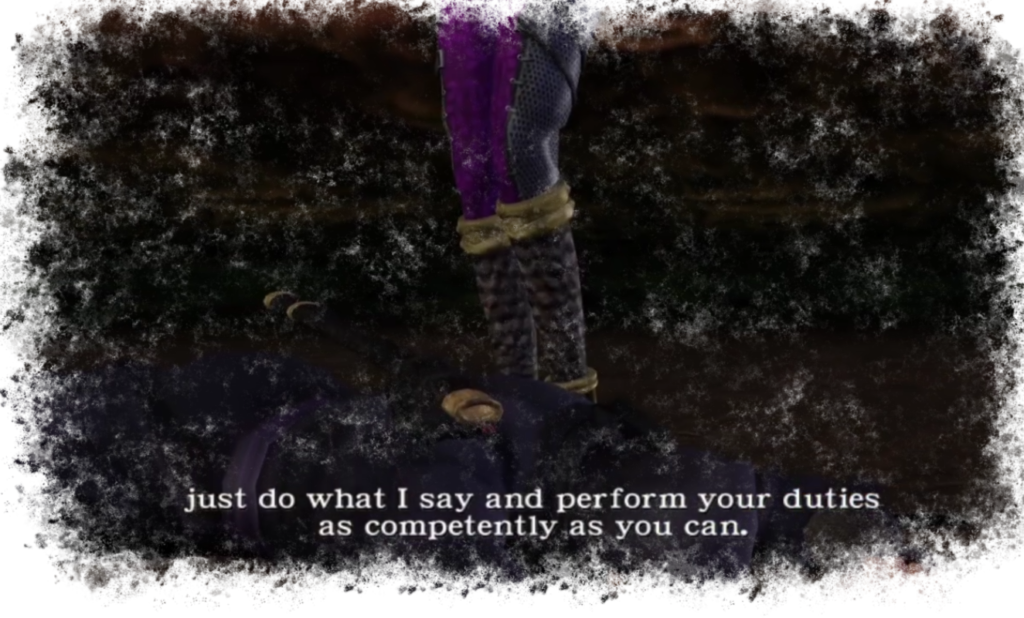
Ninja Gaiden, notorious for its ridiculous difficulty, threw easy mode at me and said: “Alright dude, you obviously can’t use the tools we gave you to make things easier, but you still bought the game. We’ll throw you a bone.” From there it wasn’t exactly smooth sailing, the game had tweaked things just enough for me to eke out wins, but it was still brutally hard.
I wasn’t asking to be held by the hand, but the simple act from the developers of extending a very blatant helping hand to a struggling player made me a lifelong fan of the series. I was even one of the few people that played Ninja Gaiden 3 at launch.
At the end of the day, it didn’t matter whether it was Mario or Ninja Gaiden; both games gave me accessibility tools, unobscured by excuses like diegesis or “maintaining a baseline experience for all players,” and allowed me to enjoy the game at more enjoyable pace. Besides, what business is it of yours that I used the Golden Tanuki or played on Ninja Dog?
To be clear, FromSoftware can make their games however they want. But what would be the harm in their own Ninja Dog mode or adjustable enemy damage modifiers? With the dev studio looking toward a future that includes what I assume is an extraction-Soulslike in Duskbloods, I wonder firstly if the game can maintain a player base on a Nintendo platform alone and secondly, if things continue to change for FromSoftware, what does their identity become?
The studio has built up plenty of brand loyalty based on difficulty alone, but that core group of fans tends to be resistant to inevitable changes in format. They would rather cry “git gud” than open their arms to new players that can’t or won’t rise to the games’ challenges. That kind of “hardcore gamers only” mentality makes it so that these fandoms can’t meaningfully grow.Of course, some would ask, why cater to those who aren’t interested in meeting the game where it is? The obvious answer is that FromSoftware wants to make more money, but I have a different one: the stories are good. These worlds need to be seen. Some of the most profound and interesting musings on life, death, and a million other things exist within these titles. The more accessible said titles are, the more players get to experience the unmatched storytelling of the series. From Demon’s Souls to Bloodborne and everything after, I’ll eagerly be there, awaiting their next masterpiece. It’d be pretty damn cool if the crowd waiting with me was even bigger than it already is. Ninja Dogs included.