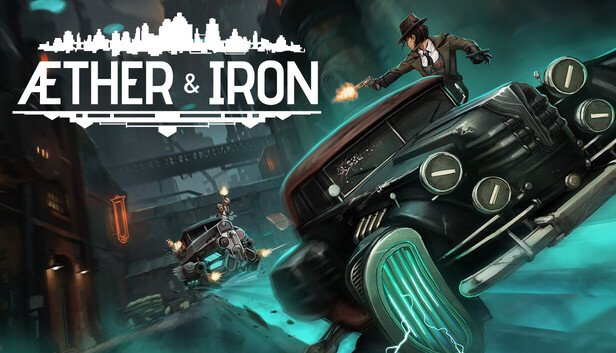
Aether & Iron
A novel, story-rich, deco-punk RPG where your car is your weapon and your success is left up to luck
by Seb Galvez
Developer: Seismic Squirrel
Release date: Mar. 30, 2026
Platform: PC
Few genres may be considered quintessentially American in their construction – the superhero movie, the spaghetti Western – but none more than film noir, according to both me and Roger Ebert, per a 2012 piece. Since its inception in the 1940s, film noir has constantly maintained a sense of relevance to modern American identity. Wreathed in smoke, dripping with cynicism and glamour in equal measure, full of casts of characters out to get theirs in an exploitative world; its hallmarks speak to a sense of distrust and the pursuit of liberation through currency.
The world of Aether & Iron is an alt-1930s New York, aloft in the sky thanks to fancy new aether-tech, which powers the cars you’ll be zipping around in as well. As smuggler Giovanna Randazzo, or Gia, you navigate the tense politics of a pair of metal islands, the “lowers,” where you do most of your business, and the “uppers,” the former home of a fugitive you’re carting around. Many might compare it to Bioshock Infinite, which would be apt if that game had a decent story. You won’t find subtlety here, though this isn’t a bad thing.
Early on, you’ll see a baron evaporate a group of protesters on a whim. On May 30, 1937, Chicago police opened fire on a crowd of protesting steel mill workers and their families, killing 10 and wounding over 100. I include this for no particular reason, except to point out that the game’s dual interests in the aesthetic and political realities of the ’30s.
In Aether & Iron, you’re no pulse rifle-wielding badass or destined one with a tome of spells; you’re a down-on-your-luck smuggler with a car that’s going to take a couple of broadsides. This is in line with many of the greatest noir protagonists who share the common trait of routinely getting the shit kicked out of them – one is reminded of Elliott Gould’s portrayal of Phillip Marlowe in 1973’s The Long Goodbye, perhaps. You navigate the world via dice, a way familiar to most TTRPG players. Rolling for your primary stats of brass, hustle, and smarts, you’ll bluff and muscle your way through the plot according to the whims of the dice.
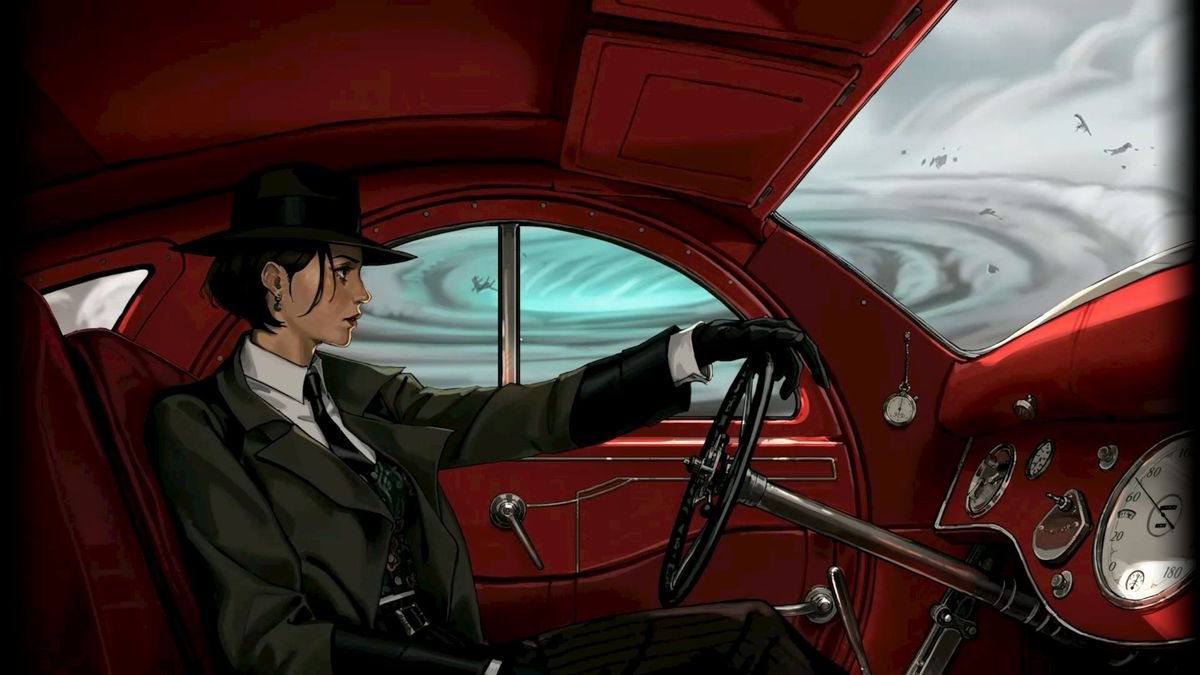
Despite the comparisons I’m making here, Aether & Iron has no interest in being a film, no matter how much it may love them. The game strikes a fantastic balance between self-indulgent extravagance and economic reality, remaining an incredibly high-effort project. The number of hand-rendered backgrounds, characters (over 200 of them), and densely written interactions exude the energy of a laboriously crafted graphic novel, with comics-inspired sequences to drive that point home.
Oh yeah, and all the dialogue in the game is voiced, and I do mean all. From high-stakes negotiations to snippets of side conversations, even the quick, creaking twinge as you investigate a crate. It’s all there.
“But pal,” I hear you say, a voice in the crowd wafting its way in from a nearby alley beneath a streetlamp that’s seen more in its lifetime than I ever will, “it’s an RPG. What about the combat?” To you, my mysterious, shadowed friend, I can happily declare that the combat is also an absolute ripper.
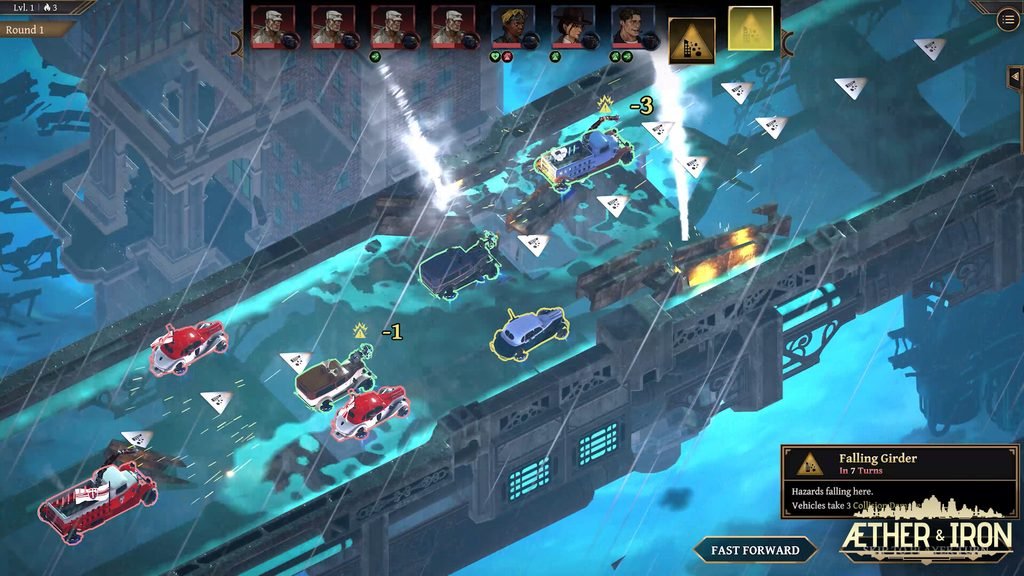
Listen, I wouldn’t have complained if the combat in Aether & Iron had leaned into the obvious; shootouts in darkened warehouses and rooftops, worn knuckles connecting with equally worn suits in a cheap bar. The instincts of many developers might have pointed toward some ducking and covering with a six-shooter, or a melee combo system, or maybe just good old-fashioned party-based combat. Here, though, in the heights of New York City, your weapon is your car. Your gun is your car, too.
You’ll slip in and out of traffic in high-speed hovercar chases, taking potshots at your pursuers, ramming goonmobiles into each other, and choosing whether to avoid or weaponize civilians. It’s easy for turn-based combat to feel stagnant, which makes Aether & Iron’s take all the more refreshing.
It also helps that the cars feel like their own characters, equal to any human in the game, as you swap out parts, customize paint jobs, and craft them into something fitting for both the hover roads and a midair shootout. Instead of choosing between plate-wearing knights or dagger-wielding rogues, you get to ask yourself the age-old American question: truck or sedan?
Aether & Iron is a dense game, which runs counter to both current triple-A and indie trends. When I say dense, I don’t mean padded with a large number of systems and inflated health bars to keep you playing. It’s simply filled with material, life, and a love for its inspirations. It doesn’t simply seek to take up your time, but asks you to sink into it, like you would into a smoke-drenched coat in a fog-covered street. Many RPGs seek to craft compelling worlds, more often than not handing you something derivative feeling and half-formed. Aether and Iron’s is lived in, brimming with people and places that feel ready to leap off the screen. It asks you to pour a drink, sit down, and just hear it out; I think it can make it worth your while.
Aether & Iron: 9.6
Care and intentionality permeate every part of Aether & Iron, from its sleek, art deco UI and easygoing brass soundtrack to every hand-rendered background and character.
The vehicle-based combat is refreshing and full of customization opportunities, and the story is both poignant today and deeply rooted in the 1930s.