Rupture: A card game for the AI era
by Henry Bruce
Disclaimer: This dev log was written by the developer of Rupture, who is not affiliated with Back Alley Games.
Today’s world is unrecognizable compared to just six years ago. The media landscape has become infinitely more fractionalized and fully on demand, allowing every user to consume whatever they want exactly when they want; COVID changed the way we interact with each other, often electronically instead of in person; and AI has changed how we create things, giving us the power to realize our wildest dreams with a single prompt. Like any progress, these advancements have the potential to make life more comfortable, but we must be careful that they don’t come at the expense of the creativity, perseverance, and community that make us all human. I designed Rupture to help cope with these rapid changes.
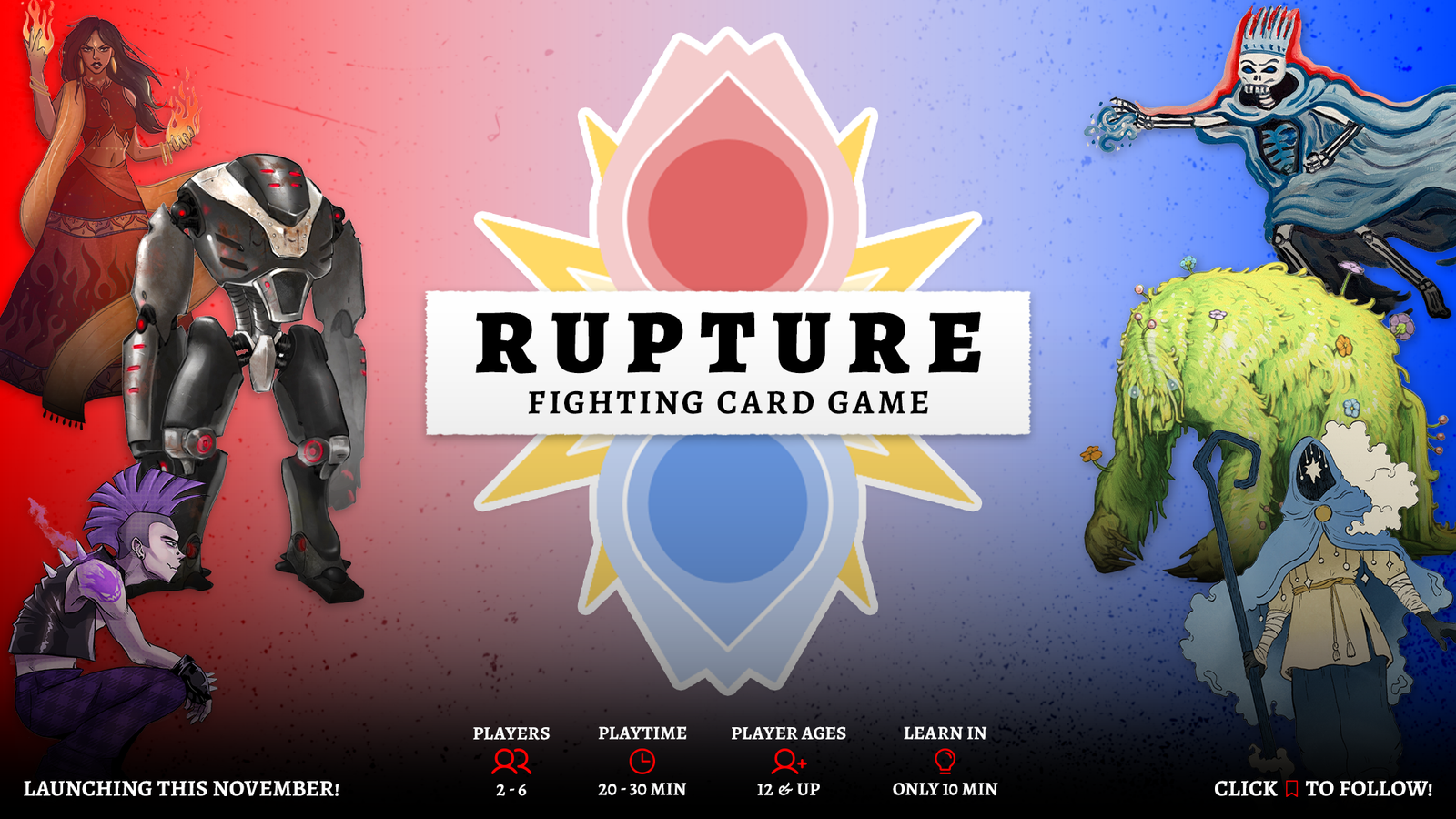
Rupture combines the turn-based mechanics of a trading card game with the pick-up-and-play excitement of a platform fighter. Players have six unique characters to choose from, each with their own premade deck, strengths, and flavors. Exciting one-on-one battles take 20–30 minutes, and the different character matchups make for infinite replayability. Learn to play in 10 minutes, play and chat with your friends all night. Every aspect of the game has been designed to facilitate old-fashioned connection in a newfangled world.
Community and creativity in 2026
Over the past handful of years, the viral idea that “inconvenience is the price of community” has become more and more important to me. Apps and games afford us the convenience to follow our every whim during our increasingly precious downtime. But this convenience comes at a cost. Every time we mindlessly fire up Netflix or Instagram, we eschew the effort required to connect with other people.
COVID forced us to try new and frustrating forms of connection, like Zoom calls, online forums, and in-game voice chat. These were all fine ways to persevere during a difficult period, but many people still lean on these mediums long after the pandemic has receded. Talking on voice chat or a Zoom call might feel like connecting, but for me, nothing can really compare to hanging out with friends face-to-face.
Alongside the tendency to stay home and stare at devices, individuals now have unprecedented power to create in the form of AI. With a couple hours and a subscription service, one person can vibe code an entire website. Google your favorite AI, type in a quick description, and that character you were imagining is generated instantly. The only limitation may be your imagination (and the amount of fresh water near your local data center), but this limitation is bigger than any of us realize. Human creativity is impossible to replicate. It needs to be built on lived experiences to feel real.
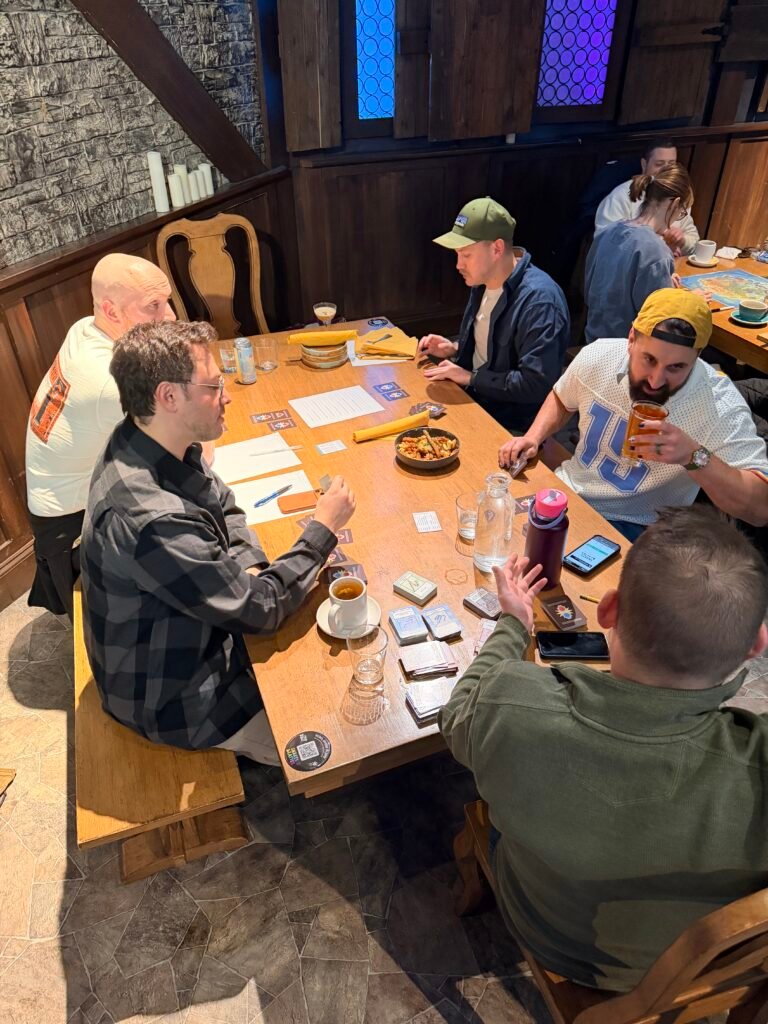
My card game, Rupture, won’t fix any of these issues, but I did create it with the specific intention to combat these technological growing pains. Rupture is a physical game that requires friends to play in person. Players have to schedule time to meet and trust each other to hold that space. One of the most rewarding parts of designing Rupture has been the constant requirement to get out of the house and interact with new people, and how every playthrough with those people has left its mark on the gameplay.
The gameplay
Because Rupture was designed to bring people together, it is intentionally simple to learn. Each turn has four phases: draw, play, bank, and pass. First, start your turn by drawing a full hand of cards. Second, play cards from your hand using banked cards as currency. Third, choose to bank any number of your remaining cards; these will be used for currency on subsequent turns. Finally, keep the remaining cards in your hand and pass the turn. Turns are snappy, so play moves quickly.
I tried to reduce frustration by eliminating energy-specific cards. Every card can be played for its stated effect or banked for energy. No hands full of mana, no energy droughts. Deciding how to use each card still creates exciting tension, but players are never fully at the mercy of their draw luck.
Time is precious, so players only have 60 cards in their deck and 20 life points to work with. If they run out of either, the game is over. I picked these numbers so that games would last 20–30 minutes, about the same amount of time as it takes to drink a beer. Finish your game, get another round, play another game.
There is plenty of strategic meat on the proverbial bone to keep an experienced gamer hooked, but the simplicity of the rules lowers the barrier to entry for new players as well. This makes the game an excellent bridge between players of different skill levels. At the same time, the turn-based format allows different age groups to compete on a level playing field.
Making a game I wanted to play
Rupture was born during a conversation with a long-distance friend at a wedding. Both being ancient 36-year-olds, we were tired of getting beat up in online games where quick reflexes are a requirement to have fun. We also didn’t feel like we had the time, money, or patience to build competitive trading card decks. We wanted to test our skills against each other but needed a turn-based format that would allow our strategies to shine.
With the problem statement defined, I bought several packs of index cards at the local convenience store and started writing down moves, experimenting with mechanics, and imagining character lore. I pulled inspiration from my favorite franchises and strove to build a game that would feel familiar but fresh, simple but deep. Soon, I had filled the Rupture arena with about a dozen fighters, each with unique strategies and flavors.
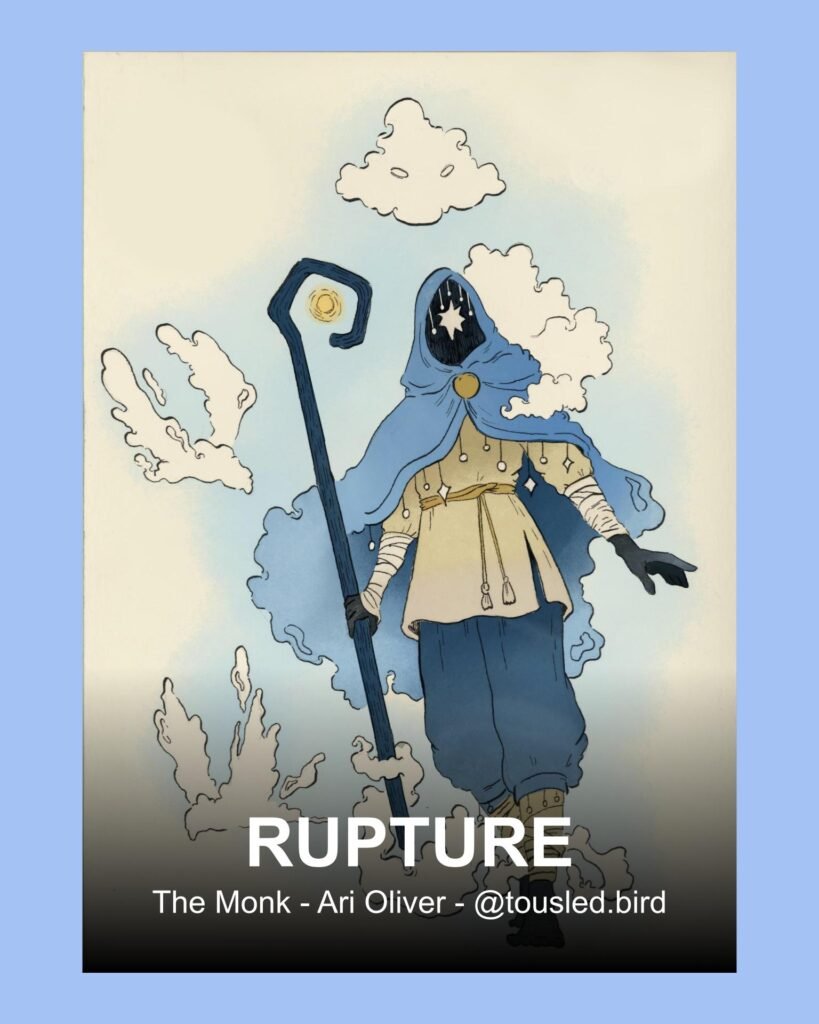
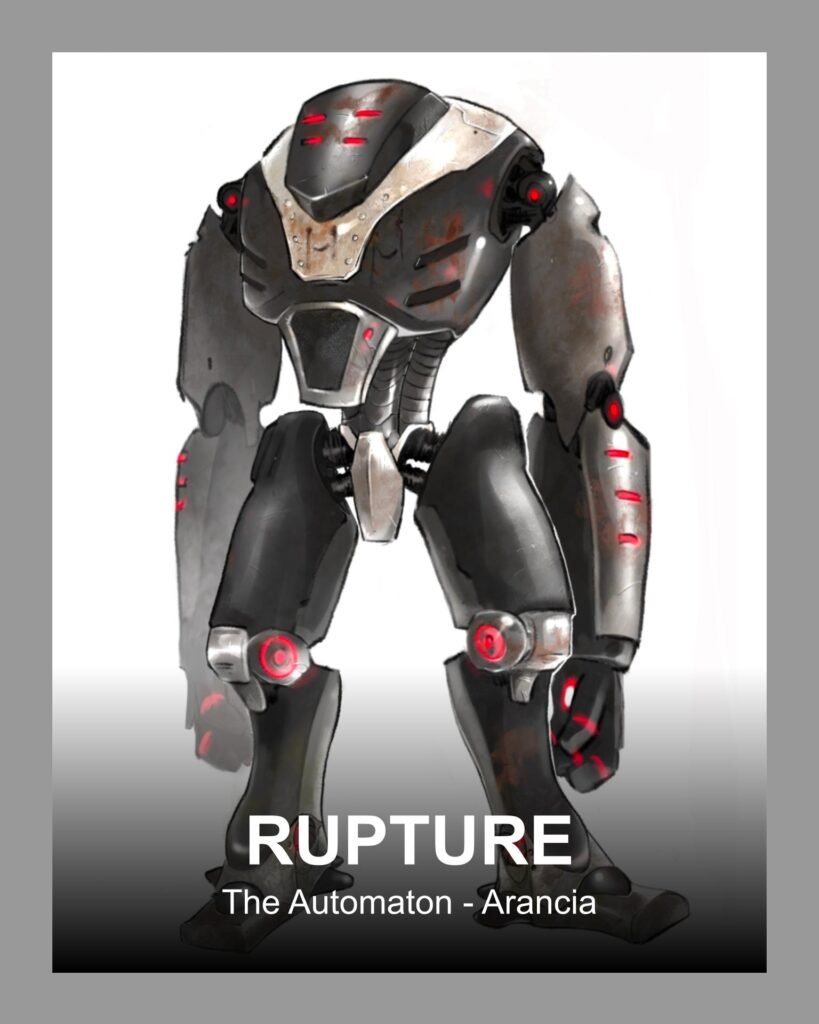
The Floraform is a sentient plant creature that starts weak and grows quickly. The Monk can turn an opponent’s assets and attacks against them. The Pyromancer can deal big damage at the cost of her own health. Every character has their own strengths the player must tailor to fit the situation at hand.
I introduced the game to my friends and family and immediately received positive feedback on the core mechanics of the game. The game was portable, the rules were easy to understand, and the different fighter matchups offered hours of replayability. The initial roster proved too unwieldy a project, so I cut it to six characters for this first-generation release. I graduated from index cards to beta-version cards I illustrated with my family around the Christmas dinner table.
After hundreds of hours of playtesting, the mechanics of the game slowly coalesced. Every solo playthrough, every tournament match, and every casual game has offered insight into what is balanced, what makes sense, and most importantly, what is fun. My process has been completely iterative, making tweaks to the cost, effect, and number of each card, testing those changes, more tweaks, more testing. Even with the help of my friends, it has been a grueling process, but in the end I’m satisfied with the result.
Real art by real artists
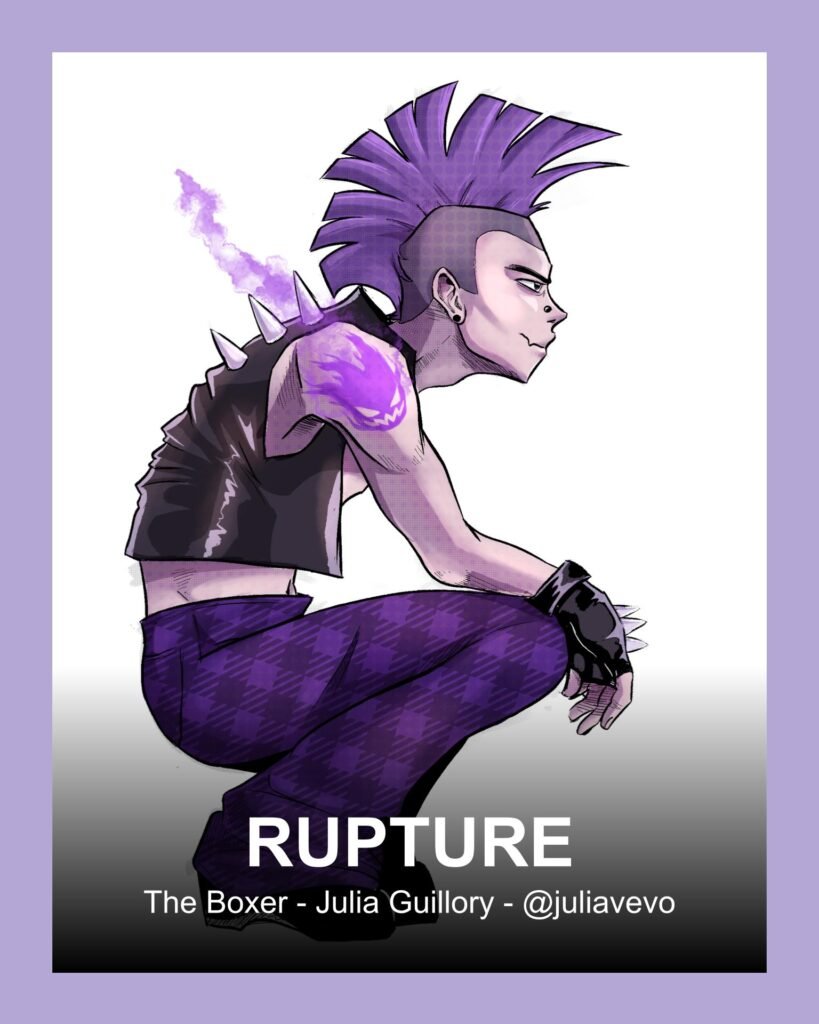
With the mechanics dialed in, it was time for art to bring the game to life. Beautiful art can turn a game into an experience, and a surprise highlight of this project has been working with our six artists and our designer. Each one of them brings their unique experience, talents, and spin to the project. Because each artist is working on their own character, they are free to experiment, take risks, and inject as much of their passion and creativity into the project as they like. I felt like I was taking a risk by giving up so much creative control, but every time I see their artwork I’m glad that I did. They have brought so many good ideas to the project that I can’t imagine what it would look like if I had simply typed my own prompts into an AI.
Not everything has been sunshine and roses, though. I’ve experienced internal uncertainty, indifference from friends, high prototyping costs, and even hostility from the rare individual in the gaming community. The important part has been to find the supporters and remember their voices. Hold on to the reasons I started the project. Keep putting one foot in front of the other.
Even something as seemingly simple as Kickstarter comes with the following paradox. You need to run a Kickstarter to get money for your project. You need the money in order to produce the product. But you need the product to create content for promotion, and it’s imperative that you promote your Kickstarter before it launches. Obviously, a giant pile of cash can fix almost any problem, but I’m honestly not sure how Kickstarter is supposed to work without a pretty major initial investment.
Regardless, I’m committed to printing this game with or without a successful Kickstarter. I would love for this to reach a large audience, but even if my friends are the only players, Rupture will have served its purpose. Working on this project has already brought me so much joy, introduced me to so many interesting people, and taken the edge off the breakneck pace of the modern world.
Going forward
I hope that Rupture can bring you some solace and connection too. Backing our project on Kickstarter is the best way to help make Rupture a reality and to take advantage of the hard work our team has put into bringing a little more fun into your life. You can visit the Kickstarter page here and follow the development journey on Instagram here. We hope to help your day feel a little more connected.